Tashkent, Uzbekistan – Senior representatives of the International Society for Krishna Consciousness (ISKCON) participated in Uzbekistan’s highly respected International Tolerance Conference, an annual gathering focused on promoting interfaith dialogue, cultural cooperation, and global peace. The event brought together international religious leaders, diplomats, scholars, and government officials committed to strengthening harmony across diverse faith communities.
A Global Forum for Religious Tolerance and Dialogue
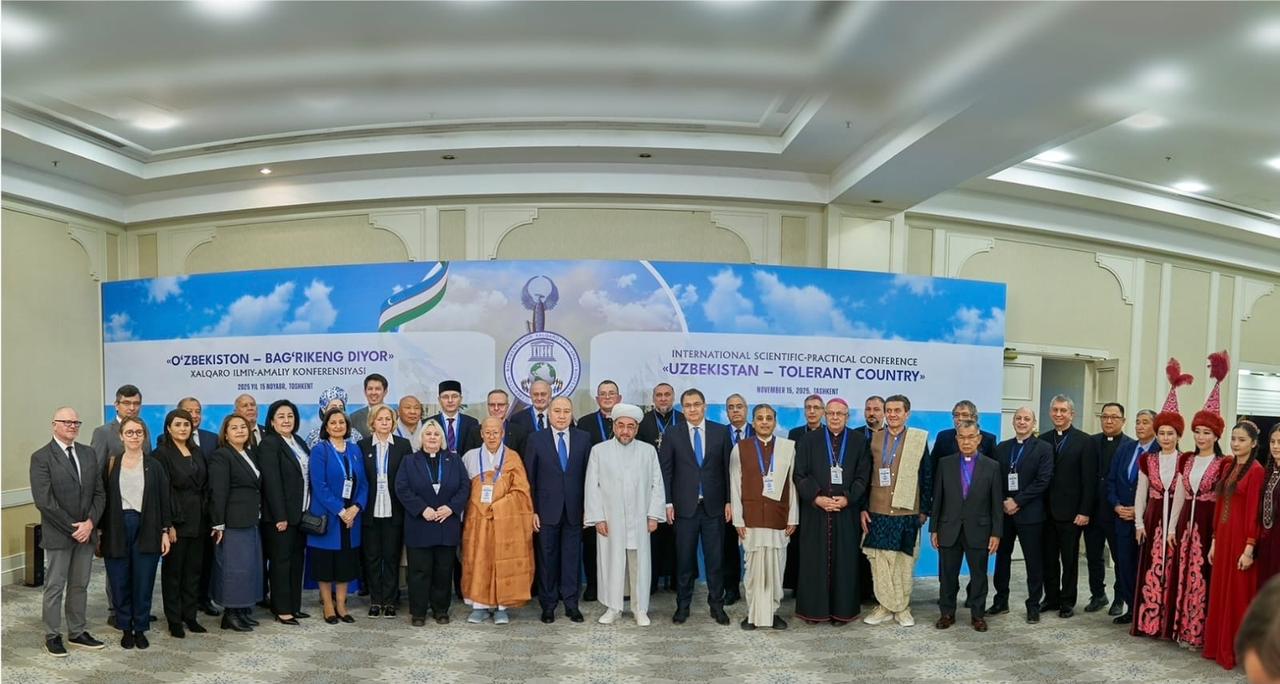
On Saturday, November 15, an International Scientific and Practical Conference titled “Uzbekistan – Tolerant Country” was held in Tashkent, gathering foreign experts, diplomats, theologians, and leaders of various religious denominations. The event, organized within the framework of the nation’s annual “Tolerance Week,” was convened by the Committee on Religious Affairs and other key state bodies. Participants emphasized Uzbekistan’s consistent efforts to strengthen interethnic and interfaith harmony, highlighting the country’s historical role as a crossroads of civilizations and its modern constitutional guarantees of religious freedom, which are foundational to this policy.
Representatives and leaders from a wide spectrum of faith traditions—including Orthodox, Catholic, Armenian, Protestant, Muslim, Jewish, Buddhist, and others—gathered alongside political figures, scholars, journalists, and representatives from the UNESCO Office in Uzbekistan. Other participants were from Russia, Armenia, Kazakhstan, Turkey, South Korea, Malaysia, India, Scotland, and additional nations. Their presence created a diverse and dynamic forum for dialogue, reflecting a shared commitment to strengthening mutual understanding and cooperation across cultures and religions.
Among the distinguished international speakers was Sadhu-priya Das (Sanjeet Kumar Jha), President of the ISKCON temple in Moscow and Chairman of the Hindu Council of CIS Countries. Invited by the Government of Uzbekistan, he delivered an address centered on the principle of Vasudhaiva Kutumbakam—“the world is one family”—highlighting the universal ideal of spiritual kinship.
In his remarks, he praised Uzbekistan’s active role in promoting regional harmony and safeguarding a pluralistic social fabric. He noted that the architectural heritage of Samarkand and Bukhara stands as a living testament to centuries of interfaith exchange. Sadhu-priya Das also acknowledged the positive environment for all faith communities in the country, including the registered presence of the Krishna Consciousness movement in Tashkent.
ISKCON was additionally represented by Shri Madhava Das from the Tashkent temple, further underscoring the movement’s engagement in the region’s ongoing interreligious efforts.
The conference served as a significant platform for building interfaith relations. High-level representatives, including Presidential Advisor Ruslanbek Davletov and Uzbek Muslim Board Chairman Mufti Nuriddin Khaliknazar, spoke about how their country consistently supports the environment of interethnic and interfaith harmony. International guests, such as Efrem Tendero, Ambassador of the World Evangelical Alliance, and Phil Wagler of the Peace and Reconciliation Network, praised Uzbekistan’s year-round commitment to tolerance. They noted that the week-long Conference, initiated by President Shavkat Mirziyoyev, translates policy into practice, creating equal conditions for all religions and setting a notable example of peaceful coexistence for the global community.
These accomplishments demonstrated ISKCON’s role as a spiritually driven, socially responsible global organization.
Uzbekistan’s Growing Appreciation of Vedic Culture
Uzbekistan has witnessed an increasing interest in Indian spiritual traditions, including yoga, Ayurveda, and Vaishnava literature. ISKCON’s presence in major cities such as Tashkent, Samarkand, and Bukhara continues to strengthen cultural ties between India and Central Asia.
Conference organizers acknowledged ISKCON’s contribution, praising the movement’s dedication to peace, education, and cultural understanding.
Strengthening ISKCON’s Interfaith Partnerships
ISKCON’s participation in the International Tolerance Conference aligns with the vision of His Divine Grace A. C. Bhaktivedanta Swami Prabhupāda, who consistently encouraged open dialogue with other religious communities. Prabhupāda emphasized that true peace arises when spiritual knowledge is shared widely and respectfully.
By engaging with Muslim, Christian, Buddhist, Jewish, and other religious leaders, ISKCON continues to play an active role in advancing interreligious cooperation.
A Significant Step in Spiritual Diplomacy
The conference served as a platform for ISKCON to further its mission of promoting spiritual values as the foundation for global harmony. With rising geopolitical tensions worldwide, such interfaith collaborations demonstrate the enduring relevance of spiritual wisdom in addressing modern challenges.
ISKCON’s involvement in Uzbekistan marks another milestone in its expanding international outreach and contributes to the global discourse on tolerance and peace.