– A Deep Bhāgavatam-Based Analysis of Spiritual Challenges
Introduction: “If I Am a Devotee, Why Is Life Still Difficult?”
Every sincere practitioner of bhakti-yoga eventually wonders:
“I chant, serve, follow principles, and worship the Deities. Why do problems still arise?”
Challenges appear as:
- emotional disturbances
- health struggles
- financial pressures
- relationship tensions
- fear, doubt, and loneliness
According to Śrīmad-Bhāgavatam and the teachings of *A. C. Bhaktivedanta Swami Prabhupada, this is not hypocrisy or failure of devotional life. This is the *real work of spiritual transformation.
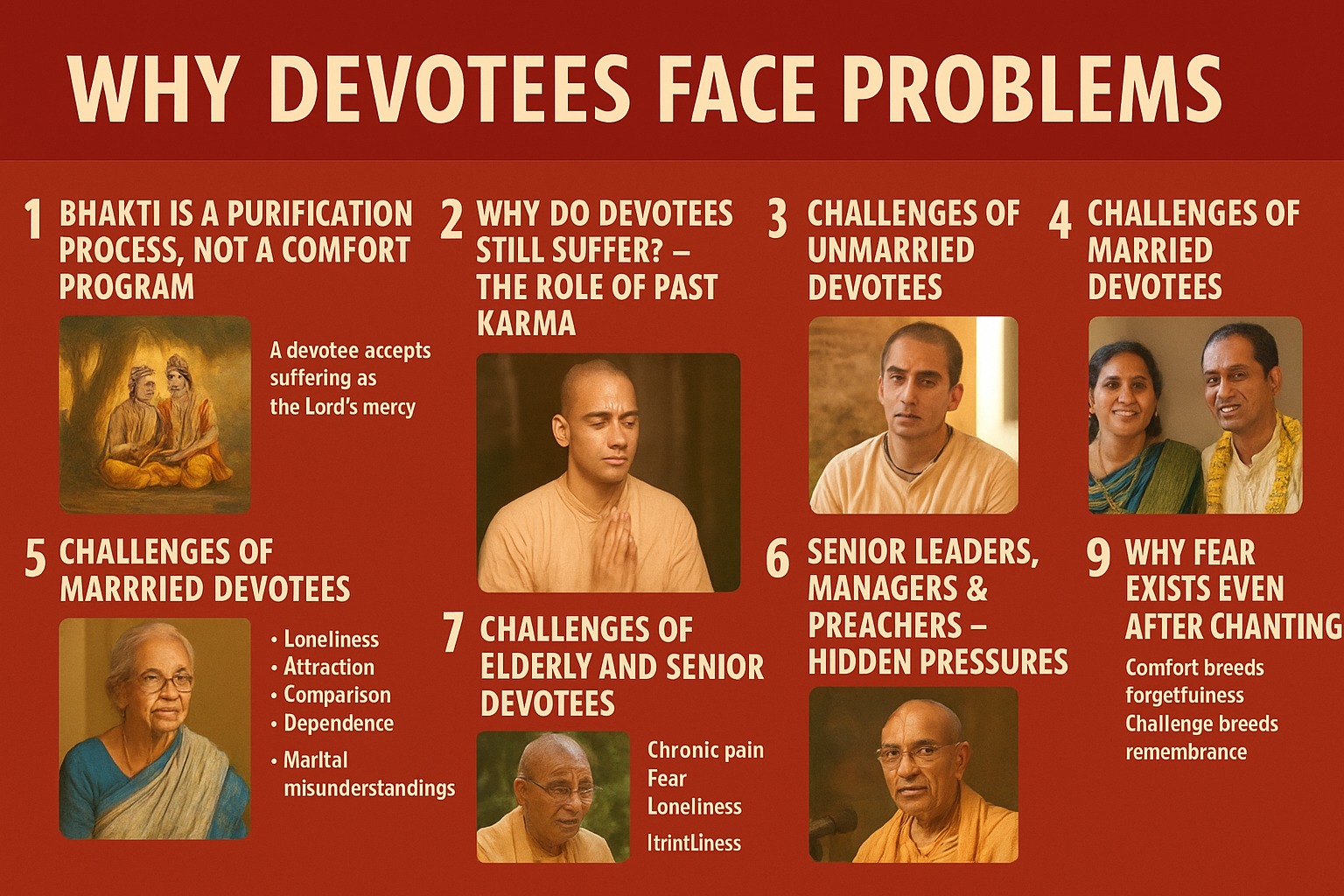
1. Bhakti Is a Purifying Fire, Not a Comfort Cushion
Bhakti-yoga is described as tapasya — voluntary austerity. When impurities leave the heart, the process shakes the comfort of false ego.
Śrīmad-Bhāgavatam (10.14.8) says:
tat te ’nukampāṁ su-samīkṣamāṇo…
“A devotee accepts suffering as the Lord’s mercy.”
Like gold purified in fire, the soul shines only after intense heat.
2. The Inevitable Role of Past Karma
Even after surrender, prārabdha karma continues until exhausted.
A devotee may chant sincerely and still experience:
- sudden financial loss
- chronic illness
- betrayal by close ones
- unexplained fear or anxiety
This does not mean Krishna has turned away. It means old reactions are being burned instead of multiplied.
3. Challenges of Unmarried Devotees (Brahmacārīs & Single Devotees)
Unmarried devotees often face invisible inner battles, such as:
Psychological & Emotional Challenges
- loneliness and emotional suppression
- attraction to opposite gender while living austerely
- comparing their years of service with others’ progress
- dependence on temple mood and leadership stability
Spiritual Risks
- pride due to renunciation
- burnout due to over-service
- secret doubts about future security
Many struggle silently because they feel they “must not show weakness.”
4. Challenges of Married Devotees (Gṛhasthas)
Married devotees face dual pressure — spiritual ideals and practical realities.
Common Struggles
- balancing job, family, children, and sādhana
- financial stress of maintaining families and temple contributions
- marital misunderstandings when one partner is more spiritually inclined
- raising children in materialistic society
They often feel:
“I am neither fully renounced nor fully material — I am stuck in between.”
5. Challenges of Elderly and Senior Devotees
Senior devotees face another class of silent suffering:
Physical Challenges
- chronic pain
- declining strength
- memory issues
- fear of dependence
Emotional Challenges
- fear of being neglected
- loneliness after losing spouse or friends
- lack of meaningful service engagement
Many aged devotees feel:
“Now I am only a burden.”
But in truth, they are the pillars of the movement.
6. Senior Leaders, Managers & Preachers – Hidden Pressures
Temple presidents, GBC members, project leaders, and senior preachers carry intense internal load:
- sleepless nights over finances
- fear of projects failing
- pressure of public expectations
- criticism from inside and outside
- loneliness of leadership
They cannot show weakness easily, so their suffering often remains invisible.
7. The Biggest Blocker of Peace – Vaiṣṇava Aparādha
No matter the āśrama, aparādha to devotees creates:
- misunderstanding
- politics
- distrust
- separation of hearts
This is described as the mad elephant offense destroying the garden of bhakti.
Outer problems often hide inner relational wounds.
8. Why Even Sincere Devotees Break Regulative Principles
This is spoken with compassion, not judgment:
Devotees fall due to:
- exhaustion
- isolation
- secret pride
- lack of honest counseling
- shame-based culture instead of healing culture
Śrīla Prabhupāda did not expect robots — he expected sincere fighters.
9. Why Fear Exists Even After Chanting
Fear is not proof of lack of devotion.
Fear arises when:
- surrender is still lands of the heart
- faith is intellectual, not realized
- attachment to control still survives
Fear is often the door to deeper surrender.
10. Kṛṣṇa’s Hidden Mercy in Problems
Queen Kuntī prayed for calamities because:
- they force remembrance
- they burn pride
- they deepen humility
Comfort breeds forgetfulness.
Challenge breeds remembrance.
11. Practical Healing Culture for Devotee Communities
Instead of superstition, gurus prescribe:
✅ Open-hearted communication
✅ Safe spaces for confession without humiliation
✅ Forgiveness culture
✅ Transparent leadership
✅ Respect for all āśramas
✅ Encouraging mental and emotional health
These are real spiritual solutions.
Conclusion: Problems Are Proof of Progress, Not Failure
Difficulties don’t mean Kṛṣṇa has abandoned the devotee.
They mean:
- false ego is breaking
- attachments are loosening
- real dependence is dawning
No problems = surface practice
Many problems = deep purification
📢 Action
🔸 Join our daily kīrtans and Bhagavad-gītā classes
🔸 Take part in seva and community programs
🔸 Support the temple’s mission through donations
🔸 Find strength in association of devotees