ISKCON Raichur

Blogs

Manjari Bhava

Pinnacle of Rasa Silent Yet Supreme Service in the Theology of Divine Love In the esoteric theology of Gaudiya Vaishnavism, no concept is more refined, intimate, and spiritually elevated than mañjarī-bhāva—the devotional mood of the confidential maidservants of Śrīmatī Rādhārāṇī. It is not merely a sentiment; it is a highly technical, ontological position within the …

Manjari Bhava Read More »

Raasa Leela

Introduction: The Pinnacle of Divine Love Among all narrations in the Śrīmad Bhāgavatam, the Rāsa Līlā stands as the most profound revelation of divine love (prema-tattva). Described in the 10th Canto (Chapters 29–33), it portrays the intimate dance between Śrī Kṛṣṇa and the Vraja gopīs, led by Śrīmatī Rādhārāṇī. Yet, this sacred pastime is often …

Raasa Leela Read More »

Marriage: The Sacred Bond

A Krishna Conscious Vision of a Loving Husband–Wife Relationship In a world where relationships are increasingly transactional and fragile, the Vedic tradition presents a deeply spiritual, purpose-driven model of marriage. A husband–wife relationship is not merely a social contract—it is a sacred partnership meant to elevate both individuals toward self-realization and divine love.A Krishna conscious …

Marriage: The Sacred Bond Read More »

Varnāśrama Dharma in the Modern Age

A Spiritual Blueprint for Society Introduction: A Forgotten Framework for Human Civilization In the present age of chaos, identity crisis, ecological imbalance, and spiritual emptiness, humanity is desperately searching for sustainable models of living. The Vedic system of *Varnāśrama Dharma—society organized according to *guṇa (qualities) and karma (work)—offers not merely a cultural relic, but a …

Varnāśrama Dharma in the Modern Age Read More »

Raichur

The Sacred Doab of Divine History, Hidden Science, and Timeless Spiritual Legacy Introduction: A Forgotten Jewel of Bharata-varsha In the northern expanse of Karnataka lies *Raichur, a land often overlooked in modern discourse yet deeply embedded in the civilizational, spiritual, and geopolitical history of India. Known historically as the *Raichur Doab, this sacred region rests …

Raichur Read More »

Purushottama Māsa (Adhika Māsa): The Supreme Month of Divine Grace

A Śāstric, Theological, and Devotional Analysis Within the sophisticated calendrical system of Vedic timekeeping, there appears periodically an extraordinary spiritual opportunity known as *Purushottama Māsa, also called **Adhika Māsa. Unlike ordinary months, this sacred period is directly dedicated to the Supreme Personality of Godhead, Śrī Krishna, who is glorified as *Purushottama—the Supreme Person beyond both …

Purushottama Māsa (Adhika Māsa): The Supreme Month of Divine Grace Read More »

OM and the Hare Krishna Mahāmantra

The Vedic corpus consistently affirms that śabda (transcendental sound) is the ontological foundation of both creation and liberation. Among all sacred utterances, Praṇava (Om) and the Hare Krishna Mahāmantra occupy a central and hierarchically progressive position within the theology of bhakti as presented in the Gauḍīya Vaiṣṇava sampradāya. 1. Ontology of Transcendental Sound (Śabda-Brahman) The …

OM and the Hare Krishna Mahāmantra Read More »

Hanuman

Among the most revered personalities in the Vedic tradition stands Hanuman, the eternal servant of Rama and one of the greatest examples of pure devotion in world spirituality. The life and heroic service of Hanuman are primarily narrated in the epic Ramayana composed by the sage Valmiki and elaborated in various Puranic and devotional texts. …

Hanuman Read More »

Lord Sri Rama, Sri Rama Navami

The personality of Rama occupies a central place in the theological, cultural, and ethical tradition of Hindu civilization. Revered as the seventh avatāra of Vishnu, Sri Rama represents the embodiment of dharma, righteous kingship, and ideal human conduct. The life and activities of Lord Rama are primarily narrated in the ancient Sanskrit epic Ramayana composed …

Lord Sri Rama, Sri Rama Navami Read More »

Bhagat Singh and the Question of God

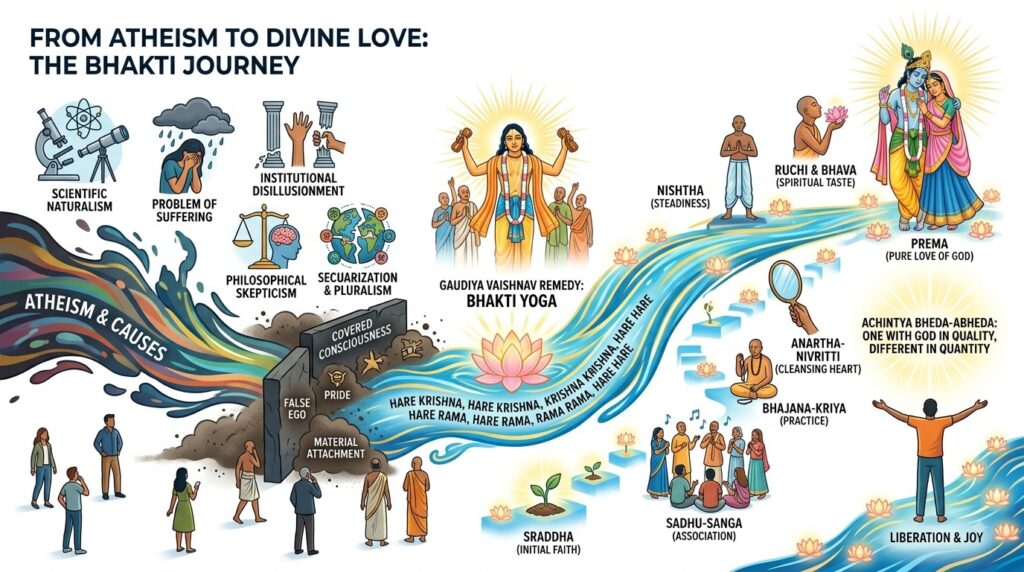
One of the most frequently discussed topics in modern spiritual discourse is the question of whether God truly exists. Among the notable historical figures who openly rejected belief in God was Bhagat Singh. While imprisoned by the British government, he wrote the famous essay “Why I Am an Atheist”, where he explained his reasons for …

Bhagat Singh and the Question of God Read More »

error: Content is protected !!