The Auspicious Appearance of the Sun’s Chariot
Ratha Saptamī, also known as *Sūrya Jayanṭī, is one of the most spiritually uplifting festivals celebrated in the Vedic tradition. Observed on the **seventh day (Saptamī) of the bright fortnight (Śukla Pakṣa) in the month of Māgha, it marks the symbolic beginning of the Sun’s **northern journey toward greater illumination and warmth. For devotees, this day represents the *inner awakening of consciousness guided by the divine energy of Lord Kṛṣṇa, who is the original source of the Sun.
1. What Is Ratha Saptamī?
A Festival of Light, Growth, and Spiritual Momentum
Ratha Saptamī commemorates the moment when *the Sun god, Sūrya Nārāyaṇa, begins accelerating his chariot, increasing the potency of the Sun’s rays. This transition is seen as the *cosmic movement from stagnation to progress, both materially and spiritually.
In the Vedic worldview, the Sun is not merely a celestial object but a divine representative of Lord Kṛṣṇa’s effulgence.
Bhagavad-gītā 15.12 states:
“The splendor of the Sun, which dissipates the darkness of the universe, comes from Me.”
Thus, Ratha Saptamī is ultimately a celebration of the energy and grace of Kṛṣṇa, who empowers the Sun with its life-giving force.
2. Scriptural Foundation of Ratha Saptamī
Purāṇic Narratives
According to several Purāṇas, on this day:
- The Sun’s seven-horsed chariot (symbolizing the seven meters of Vedic poetry or the seven colors of light) moves with renewed vigor.
- The festival marks the appearance day of Sūrya Deva, making it equivalent to a divine birthday celebration.
Symbolism in Vaishnava Thought
Though Sūrya is worshiped in many traditions, Vaiṣṇavas understand him as a revered devotee and servant of Kṛṣṇa. Lord Caitanya Himself taught that all devas derive their potency from the Supreme Personality of Godhead.
Śrīla Prabhupāda explains:
“The Sun is the eye of the Supreme Lord. It is not independent. It works under the order of Govinda.”
This understanding places Ratha Saptamī firmly within Kṛṣṇa-centered theology.
3. Significance for a Modern Devotee
A Day of Inner Renewal
Ratha Saptamī encourages devotees to reflect:
- Am I moving forward spiritually?
- Is my mind progressing toward purity?
- Is the chariot of my life aligned with Kṛṣṇa’s will?
Symbol of Dispelling Darkness
Just as the Sun dispels physical darkness, Kṛṣṇa dispels *ignorance, confusion, and lethargy. Ratha Saptamī teaches that spiritual advancement must be *steady, bright, and unstoppable.
4. Traditional Observances
Core rituals
- Early-dawn purification bath (Arka-snāna): Bath with water while placing seven arka (Calotropis/ekka) leaves on the body (head, shoulders, knees, feet) or following local custom; the leaves symbolically connect the worshipper with the Sun’s chariot and purify the body. ([Wikipedia][1])
- Offering arghya at sunrise: Stand facing the rising Sun; offer water from a copper lota with folded hands while chanting Gayatri, Aditya-hṛdayam, or Surya mantras. ([Wikipedia][1])
- Recitation of Sūrya stotras: Āditya-hṛdayam, Sūrya-aṣṭakam or other hymns are chanted to invoke health, vitality, and removal of obstacles. ([Wikipedia][2])
- Naivedya & charity: Offer cooked prasādam (often sesame/sweet items in some regions), distribute food to the needy, and perform dakṣiṇā (charity). ([Wikipedia][1])
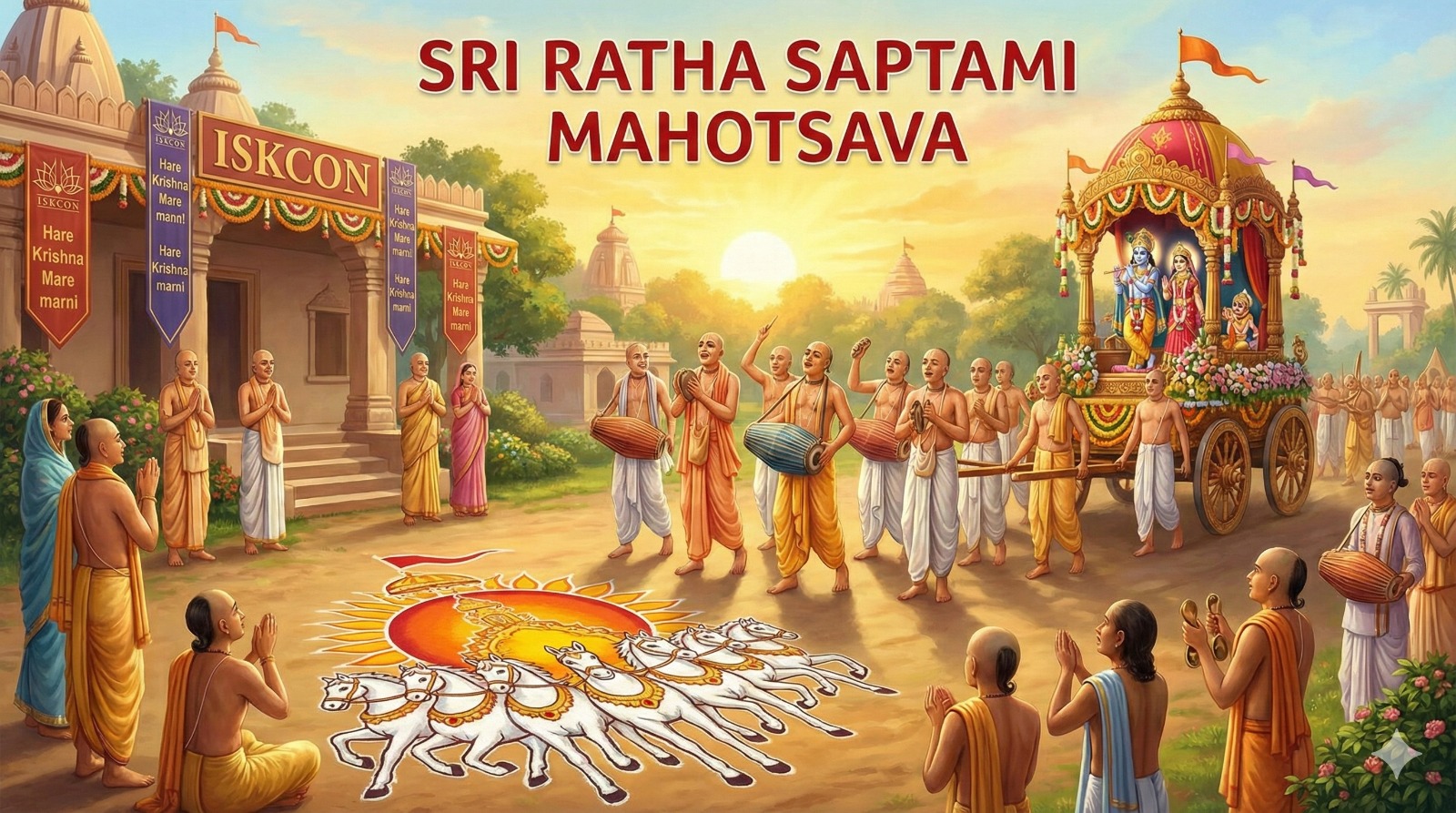
- Temple observances: In Sūrya or Viṣṇu temples there may be special processions (Sūrya mandala), kolam/ rangoli depicting the chariot, and community kīrtana. ([Wikipedia][1])
General Rituals
1. Bathing the Deity of Sūrya Nārāyaṇa: Performed with water, milk, or fragrant substances.
2. Offering Arati and Special Prayers: Glorifying Kṛṣṇa as the source of all radiance.
3. Reciting Verses Celebrating the Sun’s Devotional Service: Especially verses glorifying Kṛṣṇa’s universal form or His relationship with cosmic elements.
4. Rising Early: A symbolic gesture of welcoming spiritual light into one’s life.
5. Cow Protection Seva: Since Surya is connected with agriculture and sustenance, go-seva becomes especially auspicious on this day.
5. Ratha Saptamī in Bhakti-yoga
Recognizing the Sun as Kṛṣṇa’s Representative
Śrīla Prabhupāda repeatedly emphasized that devotees do not worship the Sun independently. Instead, they respect the Sun as:
- A faithful servant of Kṛṣṇa
- A manifestation of Kṛṣṇa’s energy
- An agent of order and life-sustenance
This offers a balanced spiritual perspective—honoring the cosmic arrangement while remaining exclusively devoted to the Supreme Lord.
Sūrya supplies life, sight and energy to all living beings and therefore deserves respectful acknowledgement — not as the Supreme, but as a powerful upādhi (manifestation) of the Lord’s energy. Śrīmad-Bhāgavatam describes the Sun as the life-soul of this universe; Prabhupāda’s purports reiterate that offerings and respect to Sūrya are fitting because the Sun sustains material life. Use Ratha Saptami to renew inner light — increase śravaṇa (hearing), kīrtana (chanting), and dāna (charity).
Prabhupāda on gratitude to the Sun: “Sūrya means the sun. The sun is supplying you so much heat, warmth, and don’t you want to give him some tax or satisfy him by sacrifices? … If you are receiving from me so many things and if you do not at least acknowledge your gratitude, then you are a thief.” (Purport on BG 3.11–19 — practical exhortation to offer thanks).
Sādhanā Focus for the Day
Devotees can deepen their spiritual lives by:
- Chanting extra rounds of the Hare Kṛṣṇa mahā-mantra
- Reflecting on how to remove “inner darkness”
- Reinforcing commitments to sādhana
- Practicing gratitude for the Sun’s life-giving service
6. Lessons for Personal Transformation
Ratha Saptamī teaches the devotee:
1. Progress Must Be Steady
Just as the Sun never stops moving, one’s devotional life should remain constant.
2. Light Must Be Shared
A devotee becomes a carrier of Kṛṣṇa’s compassion and illumination.
3. Overcome Tamas and Delay
Spiritual lethargy is removed through discipline, determination, and prayer.
4. Kṛṣṇa Is the Ultimate Goal
Even cosmic elements depend entirely on the Supreme Lord.
7. A Prayer for Ratha Saptamī
“O Lord Kṛṣṇa, source of all light and energy, kindly illuminate my intelligence, purify my desires, and guide the chariot of my life toward Your eternal service. May the Sun, Your faithful servant, inspire me to rise every day with renewed enthusiasm for bhakti.”
8. Conclusion: Awakening to Divine Light
For ISKCON devotees, Ratha Saptamī is not merely a festival of the Sun but a celebration of *Kṛṣṇa’s benevolent guidance. As the Sun embarks on his bright journey, we too are reminded to *advance with renewed purpose, clarity, and devotion.
The real “Sunrise” happens in the heart—when Kṛṣṇa’s presence shines through sincere bhakti.
🚩 Seva Opportunities
Contribute towards:
✨ Temple Construction
✨ Maha Abhishek, Annadanam, Flowers & Decorations, Goshala Seva
💰 Donation Details:
Account Name: ISKCON
Bank: Canara Bank
A/c No.: 0519101043190
IFSC: CNRB0000519
🌐 # Online Donations, online receipt: give.iskconraichur.com