The Vedic corpus consistently affirms that śabda (transcendental sound) is the ontological foundation of both creation and liberation. Among all sacred utterances, Praṇava (Om) and the Hare Krishna Mahāmantra occupy a central and hierarchically progressive position within the theology of bhakti as presented in the Gauḍīya Vaiṣṇava sampradāya.
1. Ontology of Transcendental Sound (Śabda-Brahman)
The Vedas describe ultimate reality as accessible through sound vibration:
“anāvṛttiḥ śabdāt”
— Vedānta-sūtra (4.4.22)
Liberation is attained through transcendental sound. This establishes that sound is not merely symbolic but ontologically identical with reality when spiritually realized.
2. Praṇava (Om): The Seed of Vedic Revelation
2.1 Scriptural Definition
“oṁ ity etad brahmaṇo nediṣṭhaṁ nāma”
— Kaṭha Upaniṣad (1.2.15)
“Om is the closest representation of the Supreme Brahman.”
“praṇavaḥ sarva-vedeṣu”
— Bhagavad-gītā (7.8)
“I am the syllable Om in all the Vedas.”
Here, *Om is directly identified with the Supreme, but primarily as His *impersonal, all-pervading aspect (Brahman).
2.2 Metaphysical Structure of Om
The Māṇḍūkya Upaniṣad analyzes Om as consisting of:
- A (अ) – waking state (vaiśvānara)
- U (उ) – dreaming state (taijasa)
- M (म) – deep sleep (prājña)
- Silence beyond – Turīya (transcendence)
Thus, Om encapsulates *cosmic consciousness in totality, yet culminates in an *impersonal absorption.
2.3 Limitation in Personal Realization
While Om grants access to Brahman realization, it does not explicitly reveal Bhagavān, the Supreme Personality.
This is confirmed:
“brahmaṇo hi pratiṣṭhāham”
— Bhagavad-gītā (14.27)
“I am the basis of the impersonal Brahman.”
Thus, Brahman (realized via Om) is subordinate to Krishna.
3. The Hare Krishna Mahāmantra: Direct Invocation of Bhagavān
3.1 Scriptural Authority
The primacy of the Mahāmantra is declared in the Kali-santaraṇa Upaniṣad:
“hare kṛṣṇa hare kṛṣṇa kṛṣṇa kṛṣṇa hare hare hare rāma hare rāma rāma rāma hare hare”
“iti ṣoḍaśakaṁ nāmnāṁ kali-kalmaṣa-nāśanam nātaḥ parataropāyaḥ sarva-vedeṣu dṛśyate”
“These sixteen names destroy the contamination of Kali-yuga. No higher method is found in all the Vedas.”
3.2 Semantic Theology of the Mahāmantra
Each word is ontologically significant:
- Hare – vocative of Harā (Śrī Rādhā), the internal potency (hlādinī-śakti)
- Krishna – akhila-rasāmṛta-mūrti, the all-attractive Supreme Person
- Rama – reservoir of ānanda (identified with both Rāma and Krishna)
Thus, the mantra is not descriptive but relational and devotional, invoking divine reciprocity.
3.3 Nāma-Tattva: Non-Difference of Name and Named
“nāma cintāmaṇiḥ kṛṣṇaś caitanya-rasa-vigrahaḥ pūrṇaḥ śuddho nitya-mukto ‘bhinnatvān nāma-nāminoḥ”
— Padma Purāṇa
The holy name is:
- Fully spiritual (śuddha)
- Eternal (nitya)
- Non-different from Krishna Himself
Therefore, chanting is direct association with Bhagavān, not a symbolic act.
4. Superiority of Nāma-Saṅkīrtana in Kali Yuga
4.1 Bhāgavata Declaration
“kaler doṣa-nidhe rājann asti hy eko mahān guṇaḥ kīrtanād eva kṛṣṇasya mukta-saṅgaḥ paraṁ vrajet”
— Śrīmad Bhāgavatam (12.3.51)
“O King, Kali-yuga is an ocean of faults, but there is one great quality: simply by chanting Krishna’s name, one attains liberation.”
4.2 Absolute Necessity of the Holy Name
“harer nāma harer nāma harer nāmaiva kevalam kalau nāsty eva nāsty eva nāsty eva gatir anyathā”
— Bṛhan-nāradīya Purāṇa
Threefold repetition emphasizes exclusivity: no alternative process is effective in Kali-yuga.
5. Comparative Hermeneutics: Om vs Mahāmantra
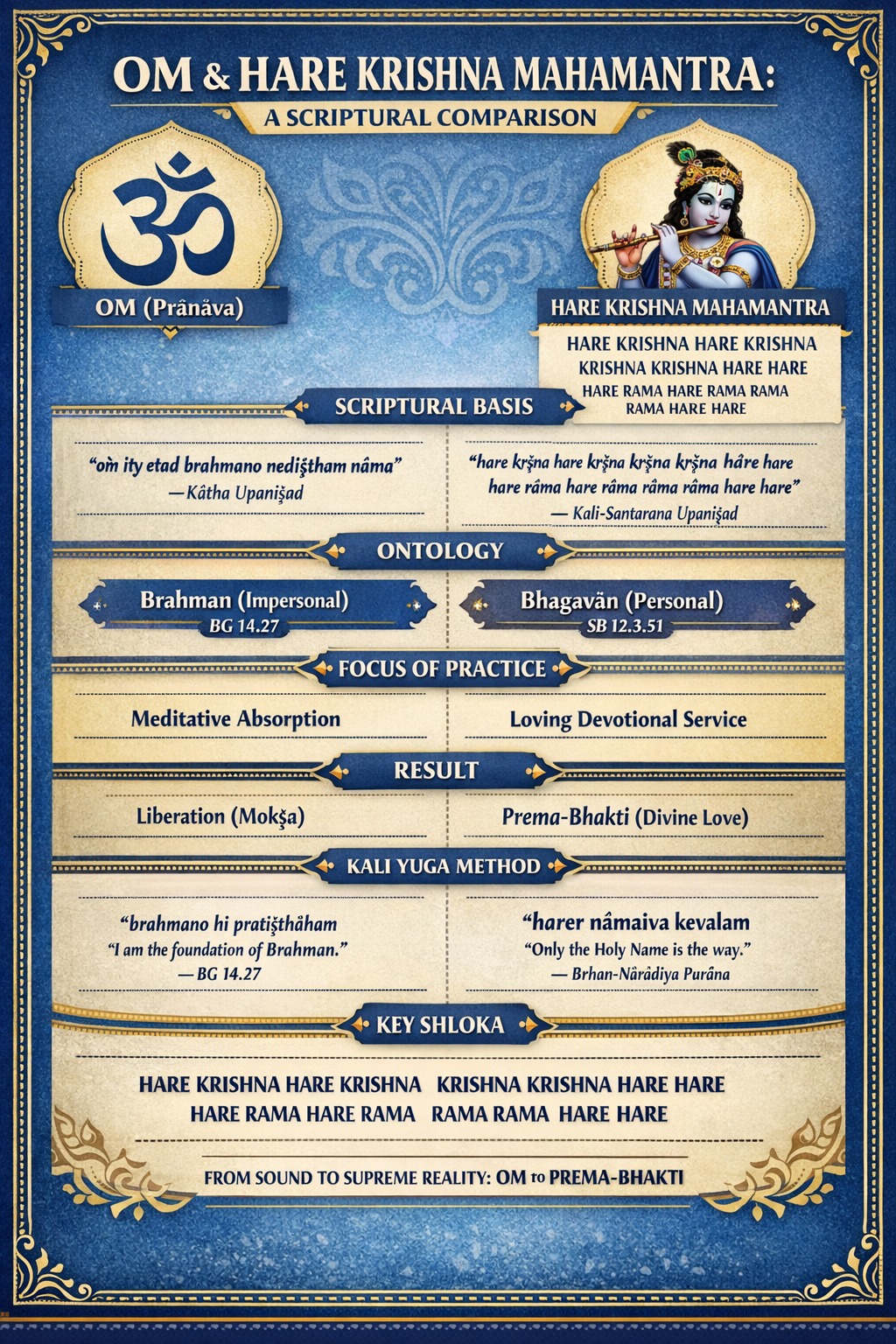
| Dimension | Om (Praṇava) | Hare Krishna Mahāmantra |
|---|---|---|
| Ontology | Brahman (impersonal) | Bhagavān (personal) |
| Relationship | Meditative absorption | Loving devotional exchange |
| Accessibility | Requires discipline, abstraction | Universally accessible |
| Result | Liberation (mokṣa) | Prema-bhakti (love of God) |
Thus, the Mahāmantra represents a higher epistemological and theological culmination.
6. Epistemic Process: From Śravaṇa to Prema
The Bhakti tradition outlines a progressive transformation:
- Śravaṇa (hearing)
- Kīrtana (chanting)
- Smaraṇa (remembrance)
- Bhāva (spiritual emotion)
- Prema (pure love of God)
The Mahāmantra directly facilitates this ascent.
7. Practical Application: Japa and Saṅkīrtana
7.1 Japa (Personal Chanting)
- Fixed number (traditionally 16 rounds)
- Attention (mantra-caitanya awareness)
- Avoidance of nāmāparādha
7.2 Saṅkīrtana (Congregational Chanting)
- Amplifies potency
- Aligns with the mission of Śrī Caitanya Mahāprabhu:
“yajñaiḥ saṅkīrtana-prāyair yajanti hi sumedhasaḥ”
— Śrīmad Bhāgavatam (11.5.32)
8. Conclusion: From Sound to Supreme Reality
Om represents the *threshold of transcendence, directing the consciousness toward the Absolute. However, the Hare Krishna Mahāmantra is the *full manifestation of divine reality, granting not only liberation but loving service to the Supreme Personality of Godhead.
Thus, for one seeking the highest perfection of life:
- Om leads to realization of the Absolute
- Hare Krishna leads to *relationship *with the Absolute**
Therefore, the wise take shelter of the holy name and constantly chant:
Hare Krishna Hare Krishna Krishna Krishna Hare Hare Hare Rama Hare Rama Rama Rama Hare Hare
This alone fulfills the ultimate purpose of the Vedas—to know, serve, and love the Supreme Lord.
Connect with ISKCON for systematic study of these scriptures, guided chanting, and authentic bhakti practice rooted in paramparā.