ISKCON Raichur

ISKCON Raichur

Holashtak

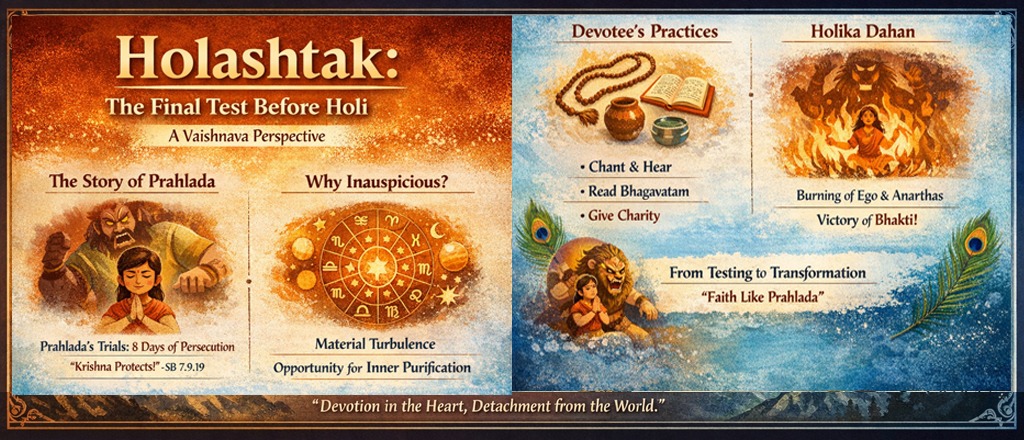
As the festival of Holi approaches, the atmosphere gradually fills with anticipation—colors, celebration, and festivity. Yet, just before this joyous occasion comes a lesser-known but deeply meaningful period called Holashtak, the eight days leading up to Holi. For many, Holashtak is simply labeled “inauspicious.” But when seen through the wisdom of Srimad Bhagavatam, it reveals …

Holashtak Read More »

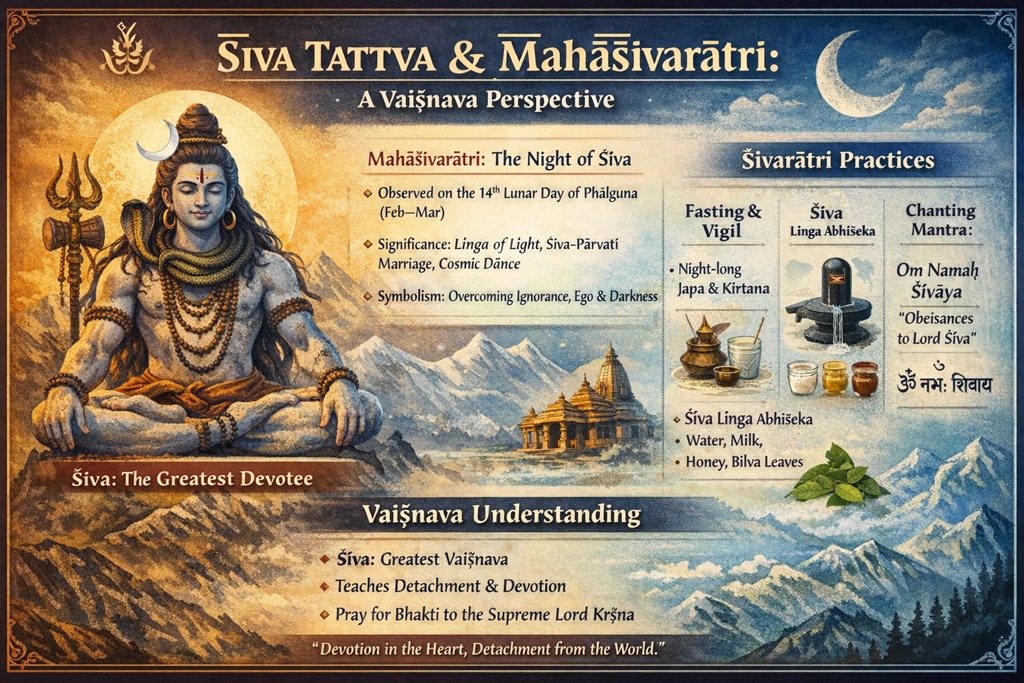
Śiva, Mahāśivarātri

Śiva, Mahāśivarātri Among all personalities described in Vedic literature, Lord Śiva stands in a category that defies simplistic classification. He is at once deeply renounced and yet a householder, the presiding deity of destruction yet the embodiment of compassion, feared by the materialistic yet adored by the spiritually inclined. To meaningfully approach Śivarātri, one must …

Śiva, Mahāśivarātri Read More »

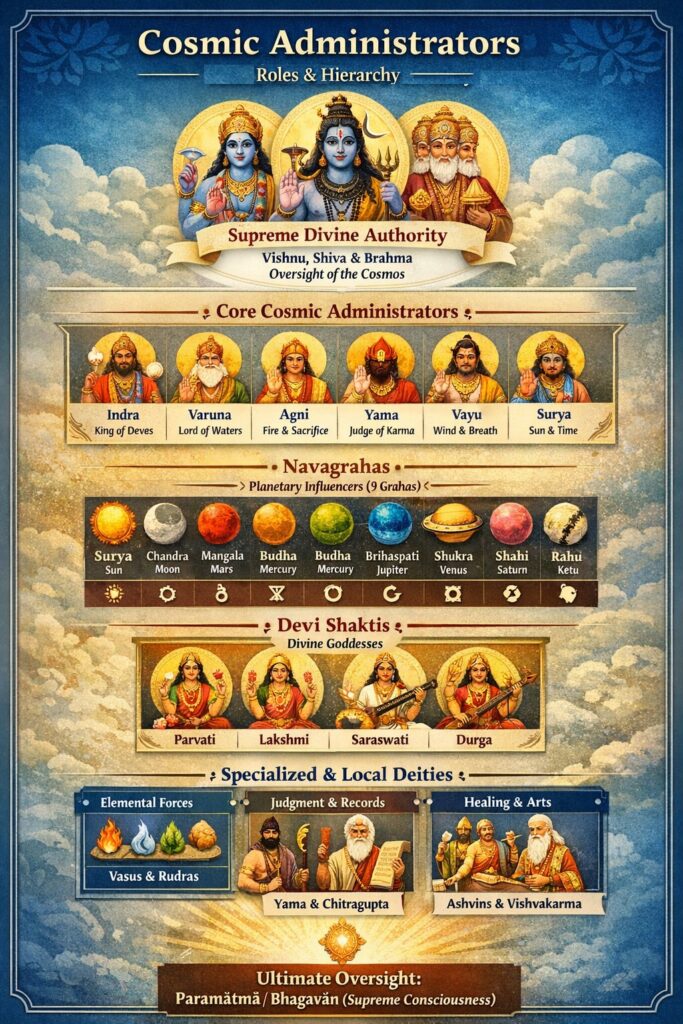
Devatas – Demigods

The Cosmic Administration of Devatās: Roles, Powers, and Influence 1. Shiva – Supreme Transformer Role: Lord of destruction and regeneration, ascetic yogi, cosmic dancer (Nataraja), meditator and purifier.Shiva is part of the traditional Trimurti (along with Brahma and Vishnu), representing transformation, dissolution, and transcendence. He is also revered as a supreme ascetic and meditation master. …

Devatas – Demigods Read More »

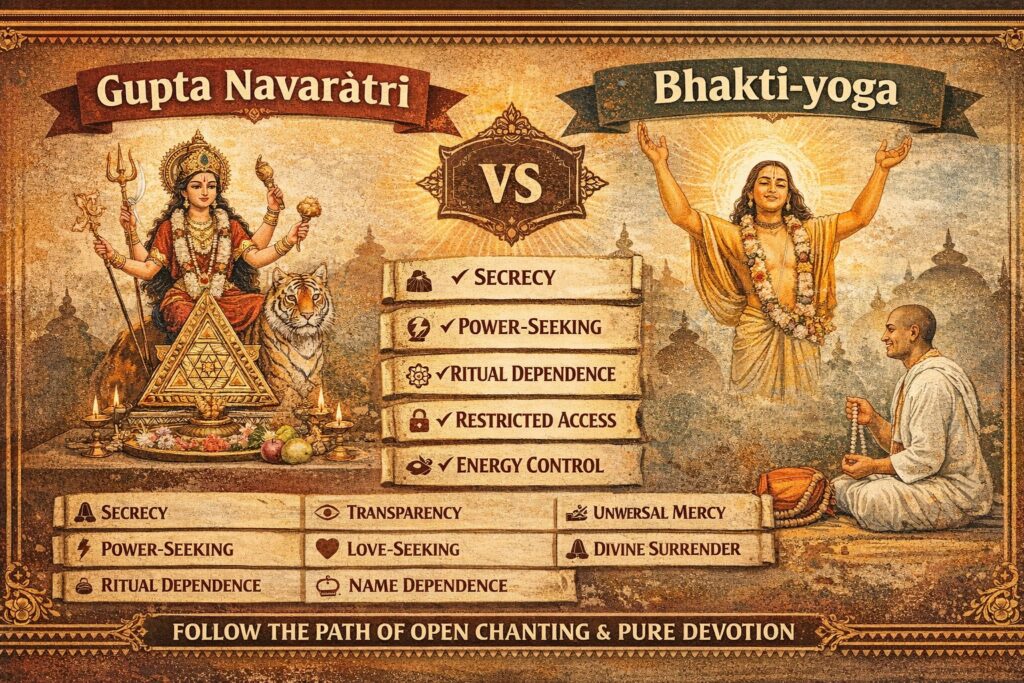
Gupta Navarātri

Meaning Gupta Navarātri literally means “Hidden Navarātri.”It is observed twice a year during: Unlike the well-known Śārada Navarātri, Gupta Navarātri is: Why Is It Called “Gupta” (Hidden)? Because: Historically, it was meant for initiated sādhakas, not mass participation. What Is Practised During Gupta Navarātri? Traditionally includes: ⚠️ Important: Scriptural Position: Is Gupta Navarātri in the …

Gupta Navarātri Read More »

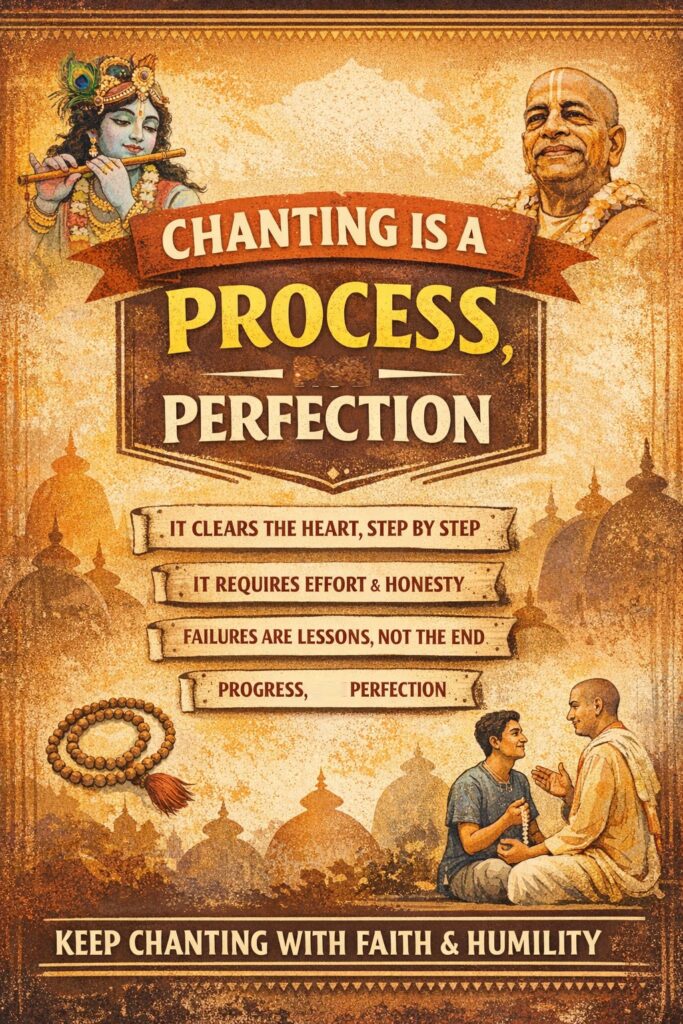
Japa / Chanting Purifies the Heart

Introduction: What Does “Purifying the Heart” Actually Mean? In bhakti terminology, the “heart” (citta) does not mean the physical organ. It refers to the mind–intelligence–ego complex that stores: ceto-darpaṇa-mārjanam“Chanting cleanses the mirror of the heart.” || Hare Krishna, Hare Krishna, Krishna Krishna, Hare Hare || Hare Rama, Hare Rama, Rama Rama, Hare Hare || But …

Japa / Chanting Purifies the Heart Read More »

Adharma in Kali-yuga

Recent acts of extreme violence, including barbaric actions witnessed in Bangladesh, have shaken the conscience of society. Many sincere seekers ask: How should devotees and spiritually inclined people respond to such brutality? Who Was Arjuna — And Why Krishna Instructed Him to Fight Arjuna was not a generic devotee. He was: svadharmam api cāvekṣya na …

Adharma in Kali-yuga Read More »

Invaders

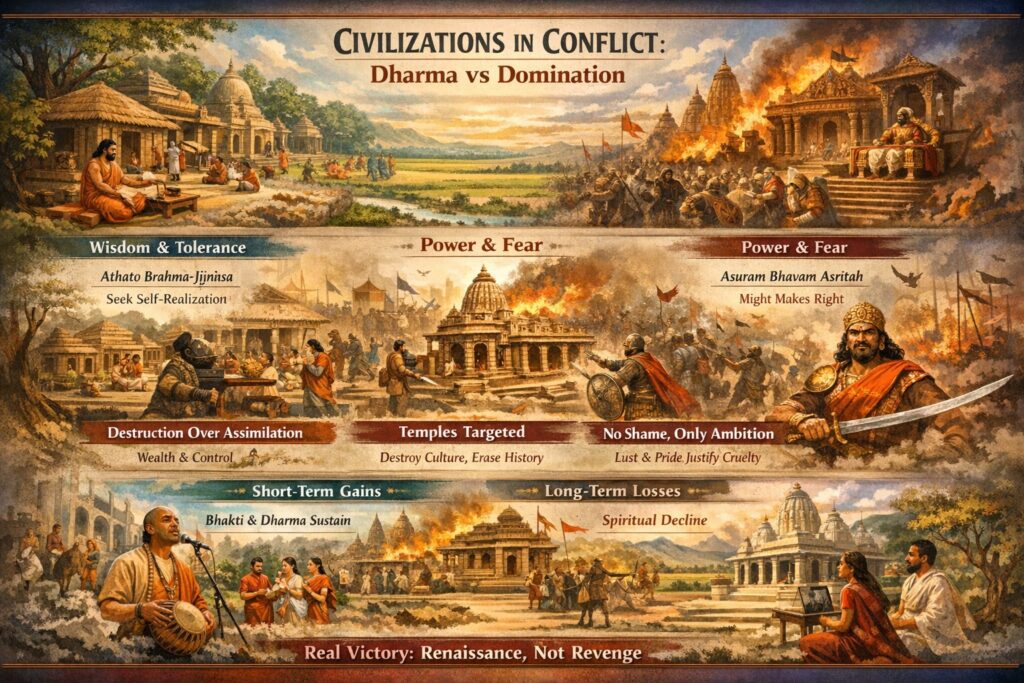
One of the most painful and persistent questions in Indian civilizational discourse is this: when invaders encountered India—a prosperous, spiritually sophisticated, pluralistic, and cultured civilization—why did many of them choose destruction instead of learning, friendship, and self‑elevation? Was there no shame in desecrating temples, suppressing knowledge systems, and brutalizing a society rooted in dharma?This is …

Invaders Read More »

Rādhārāṇī – The Original Source of Lakṣmī Devī

In Vaiṣṇava theology, especially within the Gauḍīya Vaiṣṇava sampradāya, a profound and often misunderstood truth is revealed: Śrīmatī Rādhārāṇī is the original source of Lakṣmī-devī, the goddess of fortune. While Lakṣmī-devī is universally worshiped as the eternal consort of Lord Nārāyaṇa and the presiding deity of wealth, fortune, and opulence, the scriptures reveal a deeper …

Rādhārāṇī – The Original Source of Lakṣmī Devī Read More »

Secularism: A Vedic Autopsy

Meaning, Origin, Present Reality, and the Only Viable Solution Introduction: Secularism Is Not Neutral — It Is Ideological Secularism is often projected as neutral, inclusive, and progressive.From a Vedic standpoint, this claim is false.Secularism is not neutrality. Secularism is a worldview — and today, it functions as covert atheism.For Sanātana-dharma, which recognizes God as the …

Secularism: A Vedic Autopsy Read More »

Basavanna

The Social Reformer, His Split from Tradition, and the Vedic Way Forward Introduction Basavanna (also Basava or Basaveshwara) is remembered in Indian history as a remarkable 12th-century social reformer and devotional poet in what is now Karnataka. He challenged the rigid caste system, the domination of Brahminical ritual authority, and ritual formalism in favor of …

Basavanna Read More »

error: Content is protected !!