Meaning
Gupta Navarātri literally means “Hidden Navarātri.”
It is observed twice a year during:
- Māgha Māsa (Jan–Feb) – more prominent
- Āṣāḍha Māsa (Jun–Jul)
Unlike the well-known Śārada Navarātri, Gupta Navarātri is:
- Not publicly celebrated
- Practiced secretly (gupta = hidden)
- Primarily followed by Tantric Śākta practitioners
Why Is It Called “Gupta” (Hidden)?
Because:
- Rituals are not meant for public performance
- Practices are esoteric, mantra-based
- Followers believe results are subtle and internal, not social
Historically, it was meant for initiated sādhakas, not mass participation.
What Is Practised During Gupta Navarātri?
Traditionally includes:
- Mantra japa of specific Devīs
- Yantra worship
- Austerities and vrata
- Invocation of Mahāvidyās (like Kālī, Tārā, Tripurasundarī, etc.)
⚠️ Important:
- These practices are not Vedic bhakti
- They belong to Tantric Śākta streams
- Some paths are sattvic, some rajasic, some tamasic
Scriptural Position: Is Gupta Navarātri in the Bhāgavatam?
No.
- Śrīmad Bhāgavatam does not prescribe Gupta Navarātri
- It does not recommend:
- Secret rituals
- Power-oriented worship
- Fear-based or desire-based sādhanā
Bhāgavatam consistently promotes:
śravaṇaṁ kīrtanaṁ viṣṇoḥ
— devotion to Viṣṇu through hearing and chanting
How Does ISKCON / Vaiṣṇava Siddhānta View It?
1. Devī Is Respected — Not Rejected
Vaiṣṇavas fully respect Durgā Devī as:
- External energy of Kṛṣṇa (bahiraṅgā-śakti)
- A great Vaiṣṇavī
- Servant of the Lord’s will
But respect ≠ following her independent worship systems.
2. Purpose Difference Is Crucial
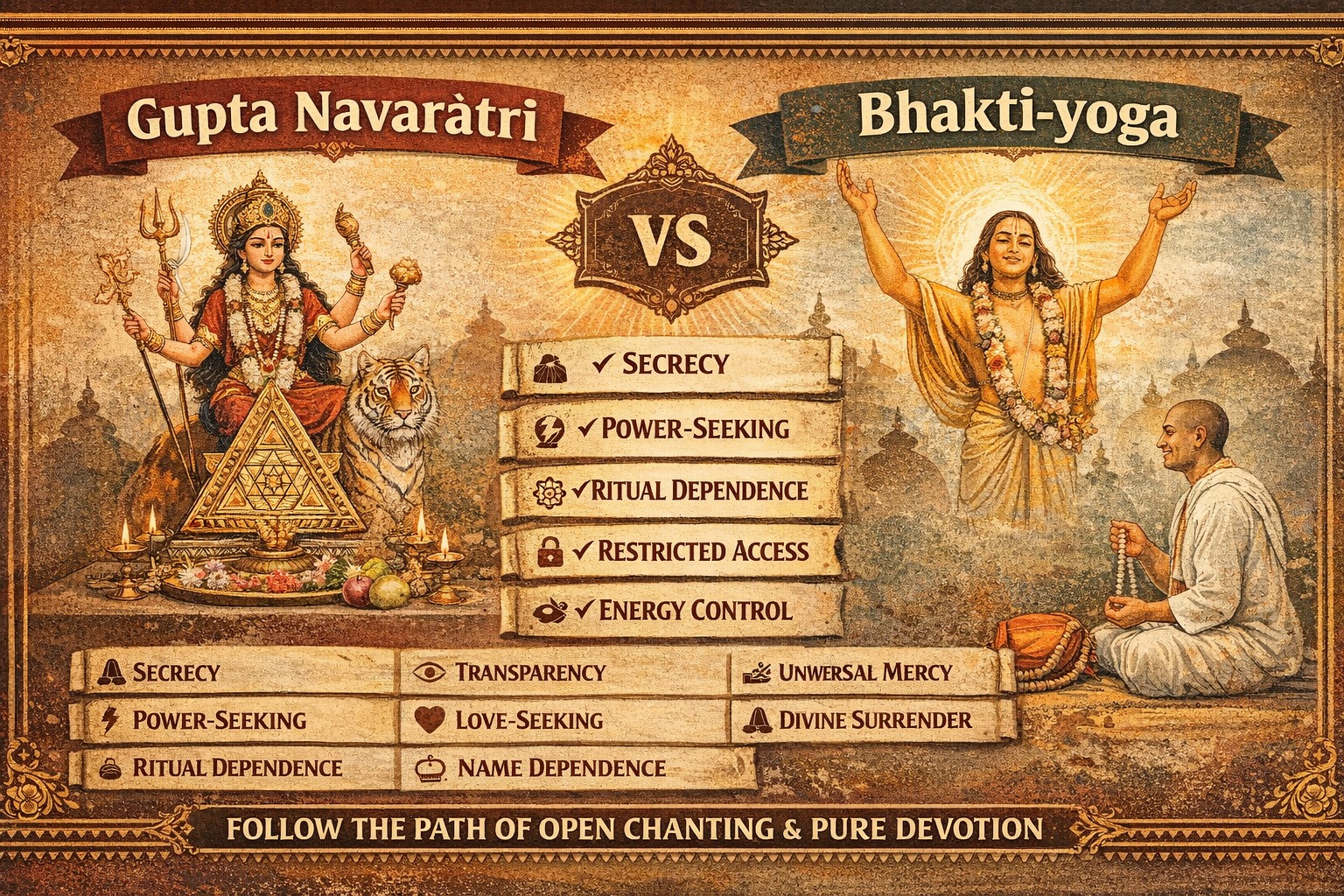
| Aspect | Gupta Navarātri | Bhakti-yoga |
|---|---|---|
| Goal | Power, siddhi, protection | Pure love of God |
| Method | Hidden mantra, ritual | Open chanting of the Holy Name |
| Accessibility | Only initiated | For everyone |
| Mood | Control, secrecy | Surrender, openness |
Bhakti is deliberately non-secretive.
Why Is It Not Recommended for Bhakti Practitioners?
Because Gupta Navarātri focuses on:
- Siddhi-oriented spirituality
- Material or subtle gains
- Control over energies
Whereas bhakti focuses on:
- Surrender
- Dependence on Kṛṣṇa
- Purification of desire itself
Śrīla Prabhupāda consistently warned against:
“Trying to use spiritual processes for material gain.”
Psychological & Social Analysis (Modern Lens)
Gupta Navarātri appeals to:
- Fear-based spirituality
- Desire for control in uncertain times
- Curiosity for “hidden” knowledge
Bhakti counters this by:
- Offering emotional security through relationship with Kṛṣṇa
- Removing fear at the root
- Making spirituality healthy and transparent
What Should a Devotee Do During These Days?
Instead of adopting Gupta Navarātri rituals, devotees may:
- Increase Harināma japa
- Read Śrīmad Bhāgavatam
- Offer prayers to Durgā Devī as a Vaiṣṇavī, requesting:
- Removal of obstacles to bhakti
- Protection from illusion
A safe prayer mood:
“O Mā Durgā, please engage me steadily in Kṛṣṇa’s service.”
Is Observing It a Sin?
No.
But for a bhakti practitioner:
- It is unnecessary
- Potentially distracting
- Not aligned with the goal of prema-bhakti
Gupta Navarātri is a legitimate practice within certain Tantric Śākta traditions, but it is neither prescribed nor required for followers of Śrīmad Bhāgavatam.
Bhakti is:
- Open, joyful, and fearless
- Centered on chanting the Holy Name
- Focused on transformation of the heart, not acquisition of power
Bhakti does not need secrecy to be powerful; the Holy Name works openly and universally.
Sensitive Q & A for Devotees
Q1. Is Gupta Navarātri wrong?
No. It is a legitimate Tantric practice, but it is not part of bhakti-yoga.
Q2. Can a devotee observe it?
A devotee may respect it, but need not practice it, as chanting Hare Kṛṣṇa is fully sufficient.
Q3. Does observing it give spiritual advancement?
It may give material or subtle results, but not pure love of Kṛṣṇa.
Q4. Is Devī worship opposed to Vaiṣṇavism?
No. Devī is honoured as Kṛṣṇa’s servant. Vaiṣṇavas simply follow the process taught by Kṛṣṇa Himself.
Q5. What should devotees do during these days?
Increase:
- Japa
- Bhāgavatam reading
Prayer for removal of obstacles to bhakti
One-Line Teaching Summary
Gupta Navarātri seeks control over energy; bhakti seeks surrender to the Energetic Supreme.