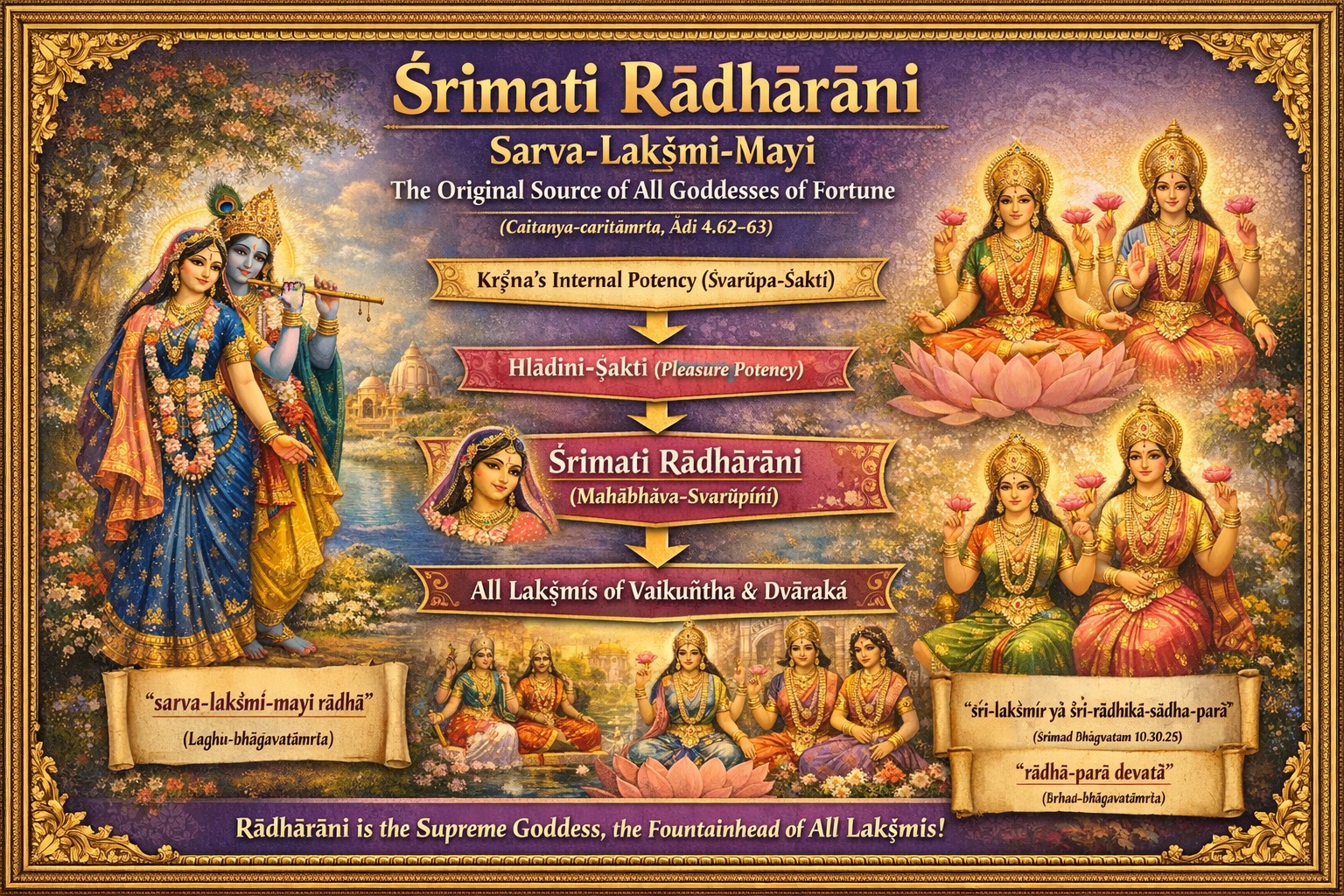
In Vaiṣṇava theology, especially within the Gauḍīya Vaiṣṇava sampradāya, a profound and often misunderstood truth is revealed: Śrīmatī Rādhārāṇī is the original source of Lakṣmī-devī, the goddess of fortune. While Lakṣmī-devī is universally worshiped as the eternal consort of Lord Nārāyaṇa and the presiding deity of wealth, fortune, and opulence, the scriptures reveal a deeper ontological hierarchy in which all forms of Lakṣmī emanate from Śrī Rādhā, the hlādinī-śakti (pleasure potency) of Śrī Kṛṣṇa.
Understanding Śakti-Tattva: Theological Foundation
The Absolute Truth manifests with energies (śaktis). Among them:
- Svarūpa-śakti (internal potency)
- Hlādinī (pleasure)
- Saṁvit (knowledge)
- Sandhinī (existence)
Śrīmatī Rādhārāṇī is the complete manifestation of hlādinī-śakti, while Lakṣmī-devī represents partial expansions of this pleasure potency, manifesting according to the mood of aiśvarya (opulence).
Direct Scriptural Evidence
1. Brahma-saṁhitā (5.37) – Source of All Lakṣmīs
ānanda-cinmaya-rasa-pratibhāvitābhis
tābhir ya eva nija-rūpatayā kalābhiḥ
goloka eva nivasaty akhilātma-bhūto
govindam ādi-puruṣaṁ tam ahaṁ bhajāmi
Śrīla Bhaktisiddhānta Sarasvatī Ṭhākura explains in his commentary that the gopīs headed by Śrī Rādhā are the original ānanda-śakti, and Lakṣmīs of Vaikuṇṭha are their expansions.
2. Caitanya-caritāmṛta – Rādhā as Hlādinī-Śakti
Ādi-līlā 4.62–63:
hlādinīra sāra ‘prema’, prema-sāra ‘bhāva’
bhāvera parama-kāṣṭhā, nāma—mahābhāva
sei mahābhāva haya ‘rādhā-ṭhākurāṇī’
sarva-lakṣmī-mayī rādhā, kṛṣṇa-prema-pradāyinī
Here the phrase sarva-lakṣmī-mayī Rādhā is crucial — “Rādhā is the embodiment of all Lakṣmīs.” This establishes Rādhārāṇī not as one Lakṣmī, but as the source of all Lakṣmī manifestations.
3. Śrīmad Bhāgavatam – Lakṣmī’s Position
SB 10.47.60 (Bhramara-gītā) glorifies the gopīs as superior even to Lakṣmī:
nāyaṁ śriyo ’ṅga u nitānta-rateḥ prasādaḥ
Śrīla Jīva Gosvāmī explains that Lakṣmī-devī desired the association of Kṛṣṇa in Vṛndāvana, but could not enter the rāsa-līlā because she could not adopt gopī-bhāva, which originates exclusively from Śrī Rādhā.
4. Laghu-bhāgavatāmṛta (Rūpa Gosvāmī)
Rūpa Gosvāmī categorically states that:
- Rādhā is Kṛṣṇa’s eternal svarūpa-śakti
- Lakṣmīs are tad-aṁśa manifestations serving Nārāyaṇa
Thus, ontologically, Lakṣmī is dependent; Rādhā is original.
5. Bṛhad-bhāgavatāmṛta (Sanātana Gosvāmī)
When Nārada Muni reaches Goloka, he understands that:
- Goloka Vṛndāvana is superior to Vaikuṇṭha
- The love of the gopīs headed by Rādhā surpasses even Lakṣmī’s devotion
This hierarchical realization confirms Rādhārāṇī as the fountainhead of all divine consorts.
Ontological Hierarchy Clarified
| Level | Consort | Mood |
|---|---|---|
| Goloka | Śrīmatī Rādhārāṇī | Mādhurya, Mahābhāva |
| Dvārakā | Rukmiṇī & Queens | Mixed aiśvarya-mādhurya |
| Vaikuṇṭha | Lakṣmī-devī | Pure aiśvarya |
All Lakṣmīs emanate from Rādhā, just as all Viṣṇu forms emanate from Kṛṣṇa.
Common Objection Addressed
“Lakṣmī is eternal; how can she have a source?”
Yes, Lakṣmī is eternal — but eternality does not negate hierarchical expansion. Just as:
- All Viṣṇu forms are eternal yet expand from Kṛṣṇa
- All jīvas are eternal yet dependent
Similarly, Lakṣmī is eternally emanating from Śrī Rādhā.
Practical Implications for Bhakti
- Worship of Lakṣmī without Rādhā leads to aiśvarya-bhakti
- Worship of Rādhā-Kṛṣṇa grants access to pure prema-bhakti
- Chanting Hare Kṛṣṇa Mahāmantra directly invokes Rādhā (Hare) first
FAQs
Is Rādhārāṇī mentioned in the Vedas?
Indirectly. The Vedas describe hlādinī-śakti, which is fully personified as Rādhārāṇī in the Bhāgavata revelation.
Is Lakṣmī different from Rādhā?
They are tattvataḥ one energy, but rasa-wise different manifestations.
Why is Lakṣmī not part of rāsa-līlā?
Because rāsa-līlā requires gopī-bhāva, which only emanates from Rādhārāṇī.
Does this contradict other Vaiṣṇava traditions?
No. Other sampradāyas emphasize Vaikuṇṭha-aiśvarya; Gauḍīyas reveal Vraja-mādhurya, the highest confidential truth.
Why is Rādhā worship essential in ISKCON?
Because Śrī Caitanya Mahāprabhu is Kṛṣṇa in the mood of Rādhā, teaching the highest love of God.
Conclusion
Śrīmatī Rādhārāṇī is sarva-lakṣmī-mayī — the source, shelter, and summit of all divine feminine energies. Lakṣmī-devī, though eternally worshipable, derives her glory from Rādhā’s original hlādinī-śakti. This understanding is not sentimental but solidly grounded in śāstra, paramparā, and siddhānta.
ārādhyo bhagavān vrajeśa-tanayas tad-dhāma vṛndāvanaṁ
ramyā kācid upāsanā vraja-vadhū-vargeṇa yā kalpitā
This is the crown jewel of Vedic revelation.