How Global Civilizations Erased Their Hindu Roots
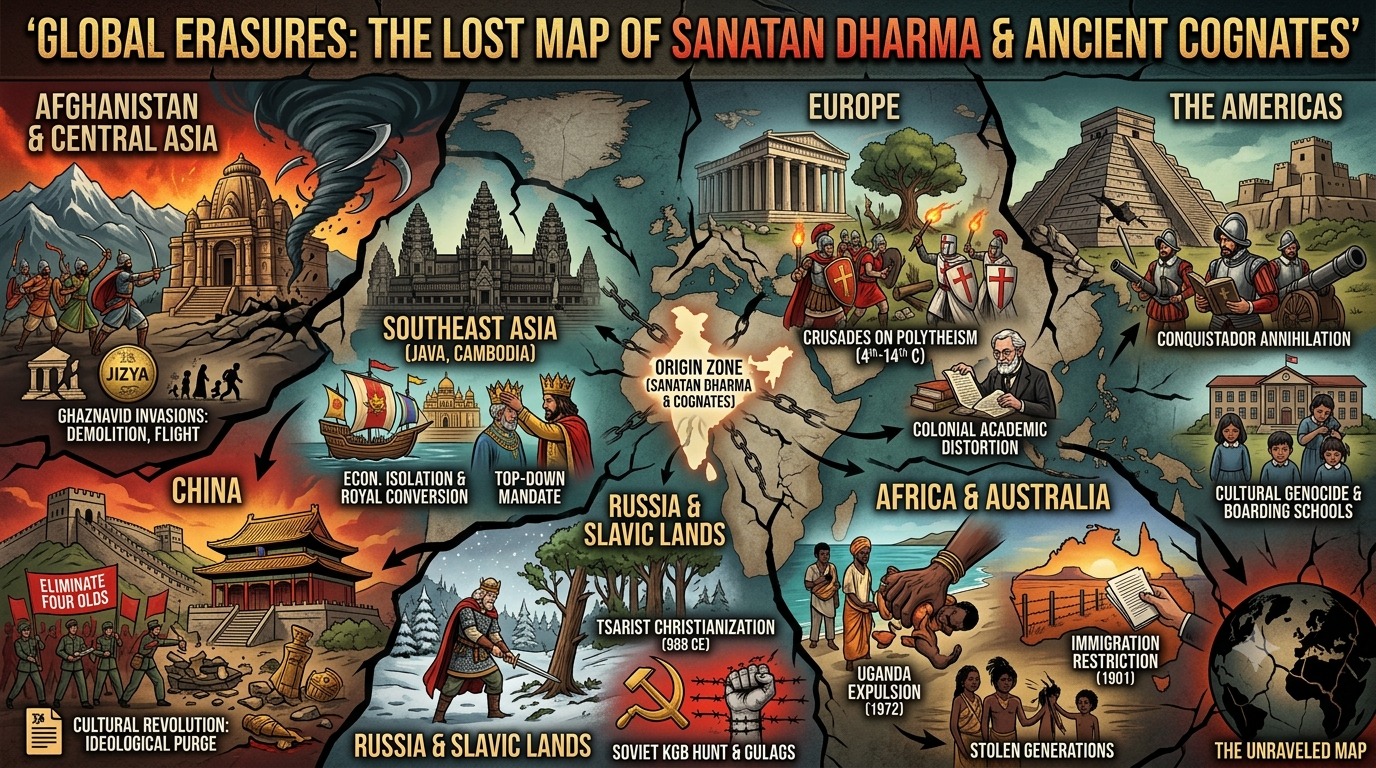
For millennia, the spiritual footprint of Varnashrama Dharma (often referred to as Hindutva or Sanatana) extended far beyond the borders of modern India. From the rugged peaks of the Hindu Kush to the tropical shores of Southeast Asia, vast empires built their laws, architecture, and societies on Vedic foundations.
Yet, today, many of these regions have completely scrubbed this heritage from their modern identities. The erasure wasn’t accidental—it was the result of systematic, centuries-long geopolitical shifts, aggressive monotheistic expansions, and deliberate cultural restructuring.
Here is an analysis of how different regions systematically dismantled their ancient Varnashrama roots.
1. Afghanistan and Central Asia: The Edge of the Sword
Before it became a geopolitical fault line, Afghanistan was a flourishing hub of Varnashrama Dharma. Regions like Gandhara (modern-day Kandahar) and Kabul were ruled by powerful indigenous dynasties, culminating in the Hindu Shahi dynasty ($873–1026\text{ CE}$).
Vedic/Buddhist Foundations ➔ Ghaznavid Invasions (10th C) ➔ Jizya & Demolition ➔ Near-Total Population Demise (20th-21st C)
- The Military Eradication: The turning point arrived in the 10th century with the rise of the Ghaznavid Empire. Sultan Mahmud of Ghazni launched consecutive invasions explicitly targeted at breaking the political and spiritual back of Hindu rulers like Raja Jayapala. Temples were systematically looted and demolished.
- Institutional Choking: Under successive Islamic sultanates, the remaining Hindu population was subjected to the Jizya (a heavy tax on non-Muslims) and stripped of land ownership.
- The Modern Exodus: The final blow was delivered in the late 20th century. In the 1970s, Afghanistan still housed roughly 700,000 Hindus and Sikhs. Through systemic Taliban and Mujahideen persecution, forced conversions, and the denial of basic rights (like public cremations), that number has dwindled to fewer than 50 individuals today.
2. Indonesia (Minus Bali): The Elite Shift and Cultural Preservation
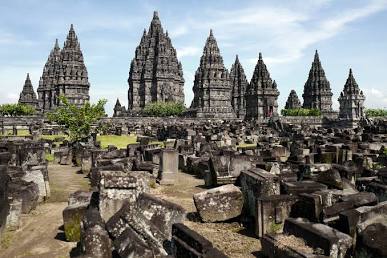
Indonesia once boasted some of the greatest Hindu empires in human history, most notably the Majapahit Empire ($1293–1527\text{ CE}$). The majestic Prambanan temple stands as a testament to this era.
| Era / Empire | Primary State Religion | Mechanics of Transition |
|---|---|---|
| Majapahit Empire (Up to 15th C) | Hinduism / Buddhism | Trade monopoly by Islamic Sultanates, cutting off royal revenues. |
| Demak Sultanate (16th C) | Islam | Systematic political realignment; elite-down conversion. |
| Modern Era (20th C onward) | Strictly Monotheistic State Policy | Dharma practitioners forced to adapt to Pancasila laws. |
- Socio-Economic Choking: The erosion of Sanatan Dharma in Java wasn’t purely military; it was a masterclass in economic displacement. As Muslim traders gained a monopoly over maritime trade routes, local elites converted to Islam to maintain wealth and political relevance.
- The Balinese Migration: When the Majapahit central authority collapsed under pressure from the Demak Sultanate, the Hindu intelligentsia, priests, and royals fled eastward to the island of Bali.
- Bureaucratic Erasure: In the 20th century, Indonesia’s Pancasila doctrine required all citizens to belong to an officially recognized monotheistic religion. To survive legally, Indonesian Hindus had to systematically reframe their decentralized, polytheistic traditions into a centralized framework (Agama Hindu Bali) to satisfy state criteria.
3. Cambodia and Thailand: The Royal Conversion
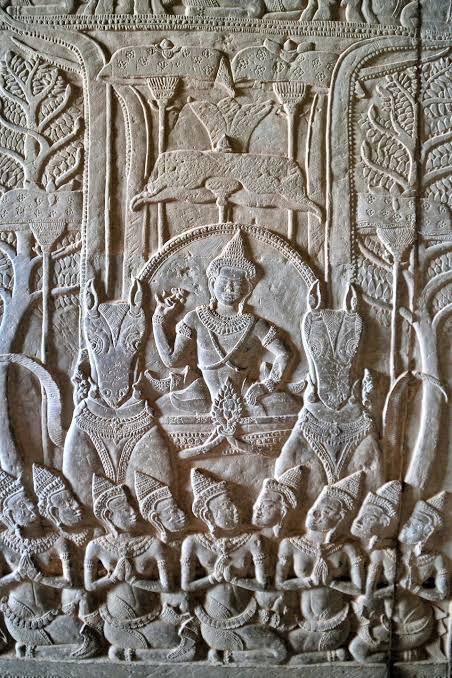
The Khmer Empire of Cambodia built Angkor Wat, originally the largest Hindu temple complex in the world dedicated to Bhagwan Vishnu. Yet, by the 14th century, Sanatan Dharma had effectively vanished as a mainstream practice in mainland Southeast Asia.
- Top-Down State Mandate: The transition from Hinduism to Theravada Buddhism in the Khmer and Thai kingdoms occurred from the top down. Royal courts simply shifted their patronage.
- The Accessibility Gap: In these empires, Hinduism functioned largely as an elite state cult centered around the Devaraja (God-King) concept. Because the complex Sanskrit rituals were heavily restricted to the royalty and the Brahmin class, the common populace felt disconnected.
- Cultural Preservation vs. Religious Erasure: While the religion was phased out, the culture was deeply embedded. Today, Thailand’s monarchy still utilizes Hindu court court rituals, and the national epic is the Ramakien (derived from the Ramayana)—but the theological core of Sanatan Dharma was completely replaced.
4. Pakistan and Bangladesh: Post-1947 Demographic Cleansing
Unlike the historical transitions of the Middle Ages, the erasure of Sanatan Dharma in modern Pakistan and Bangladesh happened in the light of modern history through institutionalized state policy.
The Demographic Plunge: At the time of Partition in 1947, Hindus comprised roughly 15-20% of West Pakistan’s population and over 30% of East Pakistan (now Bangladesh). Today, Pakistan’s Hindu population sits at less than *2%, while Bangladesh has dropped to around *8%.
- Legalized Second-Class Status: Pakistan’s systemized blasphemy laws and constitutional bar preventing non-Muslims from holding the highest state offices created a structural ceiling for Hindus.
- The Weaponization of Abduction: In Sindh (Pakistan) and rural Bangladesh, the systematic abduction, institutionalized forced conversion, and forced marriage of minor Hindu girls have been documented as a tool of demographic attrition.
- Vandalism of Antiquity: Thousands of ancient temples, heritage sites, and community lands have been systematically encroached upon, demolished, or repurposed by state-backed land mafias, effectively erasing the physical proof of a pre-Islamic past.
The systematic contraction of Sanatan Dharma in the geographic regions of China, Russia, Europe, and the Americas followed vastly different historical trajectories compared to the direct military overthrows seen in Central or South Asia. In these continents, the fading of Vedic footprints—or the prevention of their integration—was driven by imperial consolidation, ideological bans, and intellectual suppression.
5. China: The Absorption and Red Guards Cleansing
Unlike Southeast Asia, where Hinduism was a primary state religion, China’s relationship with Sanatan Dharma was split between intellectual absorption and active maritime settlements.
- The Assimilation Layer: Sanatan Dharma didn’t always die by the sword in China; it was digested. Elements of Vedic philosophy, cosmology, and deities traveled via the Silk Road through Mahayana Buddhism. Deities like Saraswati became Biàncáitiān (Goddess of Music/Knowledge), Shiva was absorbed as Dàzìzàitiān, and Hanuman provided the cultural blueprint for the legendary Sun Wukong (The Monkey King).
- The Destruction of the Tamil Guilds: During the Song and Yuan dynasties ($10\text{th}–14\text{th}$ centuries), South Indian Tamil merchant guilds settled heavily in coastal trading hubs like Quanzhou (Fujian province), building massive stone temples dedicated to Shiva and Vishnu. However, subsequent Ming and Qing dynasty isolationist policies, coupled with strict mandates enforcing Confucian orthodoxy, forced foreign merchants out. Temples were abandoned, dismantled, and their stones used for local civil fortifications.
- The Cultural Revolution (1966–1976): Any residual domestic elements of Vedic philosophy, syncretic Buddhist-Hindu temples, or ancient manuscripts were systematically targeted during Mao Zedong’s Cultural Revolution. Under the mandate to eliminate the “Four Olds” (Old Customs, Old Culture, Old Habits, and Old Ideas), Red Guards systematically destroyed historic shrines, burned classical texts, and banned all spiritual practices under state-enforced atheism.
6. Russia: The Tsarist Control and Soviet Gulags
The connection between the Vedic world and Russia spans from ancient archaeological links in the Volga region to brutal 20th-century ideological purges.
- The Erasure of Slavic Polytheism: Long before modern states existed, ancient Slavic spirituality shared profound linguistic and theological roots with Vedic Sanatan Dharma (evidenced by linguistic cognates like the Russian word Veda meaning “to know,” and deities like Perun mirroring Vedic Parjanya). The institutional conversion of Kievan Rus’ to Eastern Orthodox Christianity in $988\text{ CE}$ led to a centuries-long campaign to violently stamp out this “paganism,” destroying sacred groves and idols.
- The Astrakhan Outpost: In the 16th and 17th centuries, Indian merchants established a permanent trading colony and a functioning Hindu temple in Astrakhan at the mouth of the Volga River. While Peter the Great initially protected them for trade benefits, the community gradually suffocated as Tsarist Russia centralized power, restricted non-Christian religious expansions, and altered trade routes, forcing the merchants back to India.
- The Soviet KGB Hunt: The most systematic modern wiping occurred under the USSR. In 1971, the International Society for Krishna Consciousness (ISKCON) introduced overt Sanatan practices to Soviet youth. The totalitarian state viewed the Bhagavad Gita and Vedic philosophy as an “ideological threat” to Marxist-Leninist materialism. The KGB launched a brutal crackdown: devotees were arrested, thrown into psychiatric prisons (GULAGs), and tortured, while Hindu literature was completely banned until the collapse of the Soviet Union.
7. Europe: The Pagan Crusade and Intellectual Sanitization
Europe did not host historical Hindu kingdoms, but the continent systematically dismantled its own indigenous belief systems that were structurally and philosophically aligned with Sanatan Dharma.
Indo-European Shared Root ➔ Christianization of Europe (4th-14th C) ➔ Total Destruction of Polytheistic Systems ➔ Colonial Intellectual Distortion
- The War on Polytheism: The ancestral European traditions—Greco-Roman, Celtic, Germanic, and Nordic—were branches of the same Indo-European cultural tree as Sanatan Dharma, practicing ritual fire worship, polytheism, and a reverence for nature. The Christianization of Europe (from the 4th to the 14th centuries) systematically wiped these out. Temples like the Parthenon were converted or defaced, sacred druidic oak groves were cut down, and practicing the old ways was made a capital offense punishable by death.
- The Colonial Distortion (18th–19th Century): When European empires colonized India, they encountered Sanatan Dharma in its living form. Realizing its intellectual depth, European Indologists and missionaries deployed a strategy of academic subversion. They systematically translated Vedic texts through a deeply biased lens to present Hinduism as “primitive polytheism” or an “unjust caste-driven survival,” attempting to break the intellectual backbone of the culture to justify colonial rule and Christian missionary conversions.
8. The Americas: The Genocide of Indigenous Cosmic Visions
The American continent represents a distinct tragedy: the complete demographic and spiritual erasure of indigenous systems that shared profound systemic parallels with the worldview of Sanatan Dharma.
- Annihilation of Cosmic Frameworks: Civilizations like the Mayans, Aztecs, and Incas, alongside Native American tribes, operated on a worldview deeply aligned with Sanatan Dharma—such as cyclical time, deep reverence for the Earth (Pachamama), fire rituals, and complex temple systems mapping cosmology. The Spanish Conquistadors and European settlers systematically dismantled these civilizations through biological warfare and physical slaughter, eliminating roughly 80–90% of the indigenous population.
- The Inquisitions and Cultural Erasure: In Central and South America, the Spanish Inquisition actively hunted down indigenous spiritual leaders, burning thousands of irreplaceable hieroglyphic codices (such as the systematic burning of Maya books by Bishop Diego de Landa in 1562).
- The Boarding School Systems: In North America, both the US and Canadian governments implemented the systematic forced removal of Native American children to “Indian Boarding Schools.” The explicit state goal was to “Kill the Indian, Save the Man,” where children were beaten for speaking their languages, forced to cut their hair, and strictly forbidden from practicing their ancestral cosmic rituals, effectively breaking the chain of oral transmission that defines Dharmic systems.
The expansion and subsequent erasure—or systemic prevention—of Sanatan Dharma in Africa and Australia follow completely distinct historical mechanics. In these continents, the story is defined by maritime trade chokeholds, colonial demographic containment, and the modern weaponization of state deportation.
9. Africa: Maritime Trade Subversion and Post-Colonial Expulsions
Vedic civilization maintained a deep, ancient relationship with Africa, primarily via the Indian Ocean trade network linking the Swahili coast (Zanzibar, Tanzania, Kenya) to India’s western ports long before European arrival.
Ancient Indian Ocean Trade ➔ Swahili Coast Settlements ➔ Omani/European Monopolies ➔ Modern Political Expulsions (e.g., Uganda 1972)
- The Mercantile Displacement: For centuries, Hindu merchant guilds (like the Bhatias and Lohanas) operated extensive trading hubs in Zanzibar and Madagascar. They introduced architectural styles, metallurgy, and early cultural influences. However, by the 17th and 18th centuries, the rise of the Omani Sultanate—and later, British and Portuguese colonial powers—systematically locked Hindu traders out of permanent land ownership, restricting them to transitory commercial roles and stripping away their institutional presence.
- The Indentured Isolation Strategy: In the 19th century, the British Empire brought over 150,000 Indian indentured laborers to South Africa and East Africa (to build the Uganda Railway). The colonial administration enforced strict segregation policies. Hindus were legally barred from integrating with or preaching to the indigenous African populations, keeping Sanatan Dharma completely isolated within localized ethnic enclaves to prevent its native expansion.
- Idi Amin’s 1972 Dictatorial Cleansing: The most aggressive modern erasure occurred in Uganda. In August 1972, dictator Idi Amin declared an “economic war” against Asians, ordering the total expulsion of the country’s roughly 80,000 South Asians (the majority of whom were Hindus). The Ugandan state systematically seized Hindu businesses, looted temples, and destroyed properties. Decades of spiritual and economic infrastructure vanished in a 90-day exodus, reducing the community to near-zero until fractional returns occurred in the late 1990s.
10. Australia: The White Australia Isolation and Indigenous Erasure
Australia represents a case where potential ancient integration was completely cut off by racial immigration laws, followed by the modern administrative suppression of indigenous lineages that shared migratory similarities.
- The Pre-Colonial Genetic and Cultural Drift: Evolutionary and linguistic studies have long pointed to a profound event around 4,000 years ago, when an influx of migratory waves from India reached Australia. This era matches deep structural shifts in Aboriginal stone tool technologies and the sudden appearance of the Dingo. While a formalized “religion” didn’t establish a state footprint, shared cosmic philosophies regarding ancestral land stewardship, oral transmission, and deep geometric patterns in sacred art reflect these ancient prehistoric links.
- The “White Australia” Legal Chokehold: During the 19th century, small numbers of Indian camel handlers (“Ghans”) and laborers arrived in outback Australia, building the country’s earliest makeshift shrines. However, the systematic prevention of Sanatan Dharma took the form of the Immigration Restriction Act of 1901 (the “White Australia” policy). The state explicitly targeted non-European immigrants using biased “dictation tests” to deny entry. By legally banning Asians, Australia effectively froze out Dharmic practices and demographic growth for over half a century.
- The Stolen Generations and Cosmic De-rooting: Similar to the boarding school systems of the Americas, Australia executed the systematic forced removal of Aboriginal and Torres Strait Islander children from their families between 1910 and 1970. By legally forcing indigenous populations into Christian state missions and forbidding ancestral customs, the Australian government systematically snapped the chain of oral traditions. This effectively erased the deeply rooted, cosmic spiritual frameworks that naturally mirrored the foundational tenets of Sanatan Dharma.
The Continental Theme: Across both Africa and Australia, the suppression of Sanatan Dharma didn’t rely on the destruction of massive historic stone monuments like in Europe or Asia. Instead, it relied on geographic and demographic manipulation—using colonial segregation, racial bans, and sudden dictatorial expulsions to ensure the worldview could never permanently take root outside of immigrant boundaries.
Tangible physical, linguistic, and archaeological proofs of Sanatan Dharma stand highly visible across the globe.
1. Southeast Asia & China: Architectural Giants and Stone Bas-Reliefs
The most undeniable proofs exist in the colossal stone temples that simply could not be completely demolished by changing regimes.
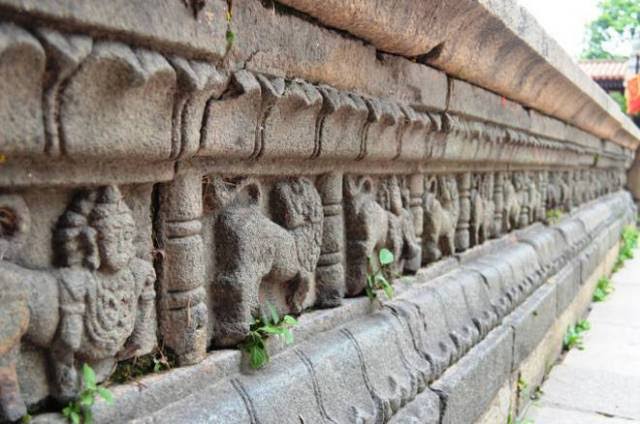
- Indonesia: Aside from Bali remaining actively Hindu, Java holds Prambanan, a massive 9th-century complex dedicated to the Trimurti (Shiva, Vishnu, and Brahma). Its stone walls are carved with the entire narrative of the Ramayana.
- Cambodia: Angkor Wat still stands as the world’s largest religious monument. Look closely at the gallery walls; you will find a massive 49-meter stone bas-relief depicting the Samudra Manthan (The Churning of the Ocean of Milk) and thousands of carved Apsaras.
- China: In the coastal city of Quanzhou, the Kaiyuan Buddhist Temple features pillars and bases built entirely from the ruins of 13th-century Tamil Hindu Shiva temples. They feature detailed granite carvings of Narasimha tearing apart Hiranyakashipu, and Shiva dancing.
2. Afghanistan & Central Asia: Coins and Sculptures
While the surface monuments were razed, the earth has preserved unmistakable proofs.
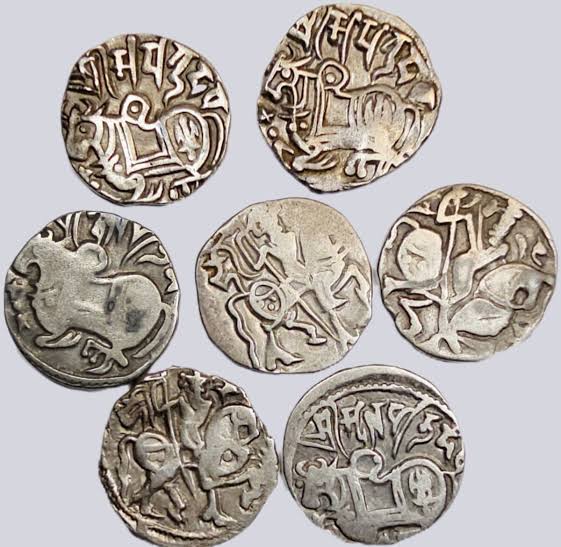
- The Numismatic Proof: Coins minted by the Kabul Shahis (the rulers of ancient Afghanistan before the Ghaznavid invasions) are routinely discovered. These silver coins feature the sacred Nandi Bull couchant on one side and a prominent Trishul (trident) or a horseman on the other.
- Gardez Ganesha: Discovered just south of Kabul, this magnificent 5th-century white marble statue of Maha Vinayaka (Ganesha) features a clear Sanskrit inscription declaring it was consecrated by a king named Shahi Khingala. It is currently preserved in Kabul.
3. Russia and Europe: Toponymy, Language, and Idols
The proof here lies heavily in the soil and the very words people speak.
- The Volga Vishnu: In 2006, archaeologists excavating an ancient village site along the Volga River in the Samara region of Russia unearthed a 1,000-year-old bronze idol of Bhagwan Vishnu, dating back to the 7th–10th century CE.
- Linguistic Cognates: The structural DNA of European languages contains undeniable proofs of shared Indo-European origins.
- Russian: The word for “to know” is Veda (Ведать), “heavenly light” is Nebesa (Sanskrit: Nabhas), and “youth” is Molodoy (Sanskrit: Malada).
- Geographic Names (Toponymy): Rivers in Russia bear ancient names like the Kama River (named after the deity of desire/love) and the Moksha River (the concept of liberation).
4. Africa and Australia: The Living Links
- The Murugan Temple of Reunion Island: In the African-adjacent territories colonised by the French and British, over 30 temple structures built by early Tamil laborers survive.
- The Australian Dingo and Genetics: In 2013, a major study published in the Proceedings of the National Academy of Sciences (PNAS) proved that substantial gene flow occurred from India to Australia approximately 4,000 years ago—matching the exact physical arrival of the wild Dingo and highly specialized micro-blade stone tools to the continent.
Cultural Resilience vs. Political Survival
The global decline of Varnashrama Dharma outside of India highlights a historical reality: religions that do not heavily proselytize or rely strictly on elite royal patronage are highly vulnerable to systematic political engineering. Where sword and tax failed, bureaucratic restructuring and economic isolation succeeded.
While the architectural ruins of Angkor Wat or Prambanan remain global wonders, they serve as historical reminders of a vast civilization that was systematically dismantled.