How Ancient Vedic Science Was Twisted Into “Patriarchal Oppression”
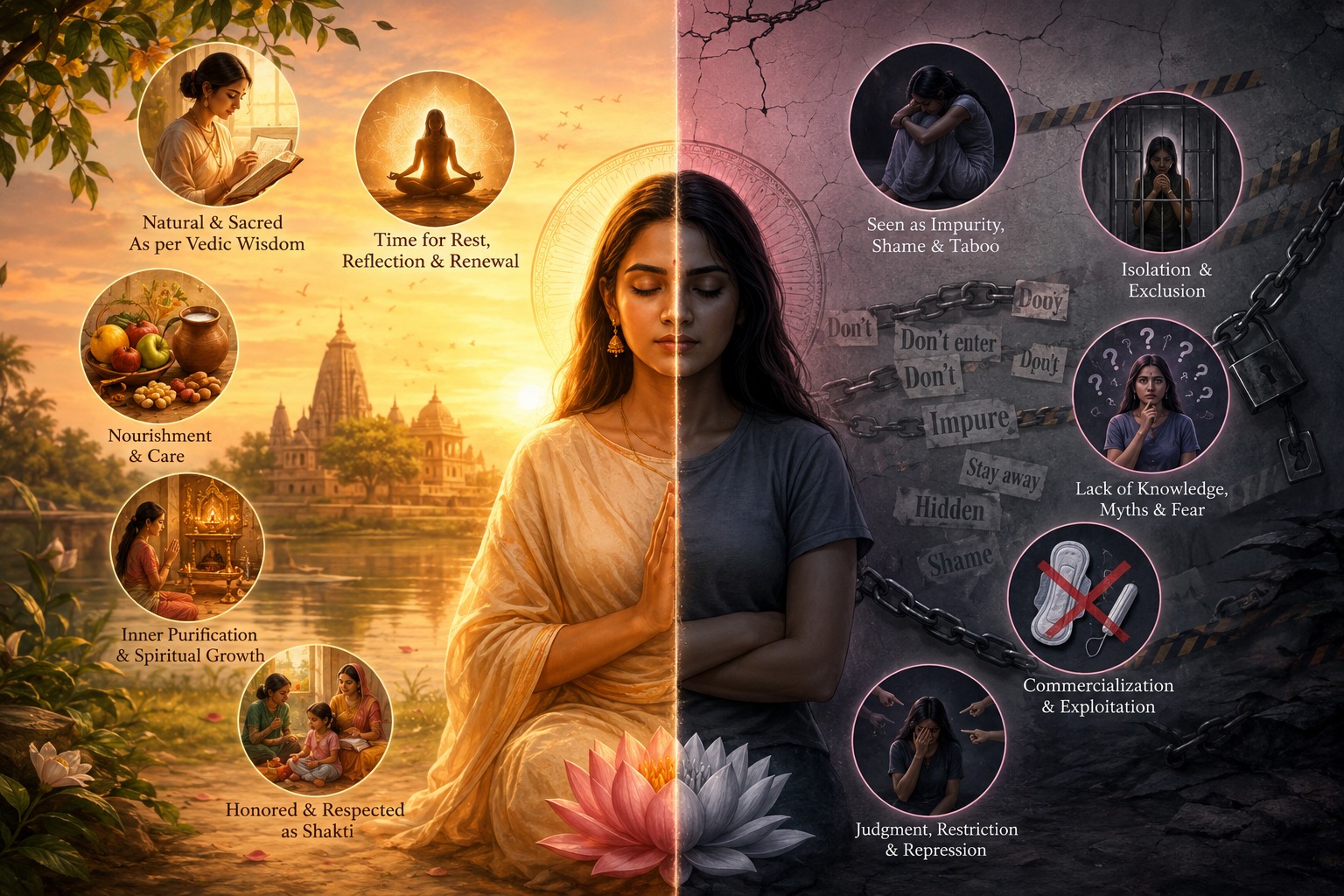
For decades, modern narratives—driven by a mix of colonial mistranslations, Western savior complex, and lazy revisionism—have preached a single gospel: ancient Indian traditions viewed menstruation as a dirty, oppressive taboo.
They point to isolated rooms, temple bans, and dietary restrictions, framing them as evidence of misogynistic shaming.
They couldn’t be more wrong.
When you dig into the original Vedic texts and Ayurvedic Samhitas, a drastically different truth emerges: menstruation (Rajaswala) was understood not as a curse, but as a physiological reset, a spiritual austerity, and a mandatory period of absolute immunity from physical labor.
Here is the unfiltered narrative on how an ancient healthcare framework built for women’s ultimate comfort and bio-energetic protection was distorted into a symbol of repression.
1. The Vedic Origin: A Cosmic Boon, Not a Curse
The origin of menstruation in Vedic literature is detailed in the Yajurveda (Taittiriya Samhita 2.5.1).
When King Indra incurred the heavy spiritual debt (Brahmahatya) of slaying Vishwaroopa, he sought a way to distribute his burden across the cosmos. Four entities agreed to absorb a fraction of it in exchange for a divine boon (Varadana):
- Earth (Prithvi):** Absorbed a portion in exchange for the power to regenerate despite deep excavation.
- Trees (Vriksha):** Absorbed a portion in exchange for the power to regrow after being cut down.
- Water (Samudra):** Absorbed a portion in exchange for perpetual movement and purification.
- Women (Stree):* Absorbed a portion in the form of monthly cycle (*Rajaswala)—in exchange for the exclusive cosmic power to give birth, regenerate blood, and naturally purge bodily impurities every 28–30 days.
The Takeaway: In Vedic cosmology, menstruation is the ultimate self-cleansing bio-mechanism. While men required rigorous Tapasya (austerity) or complex rituals (Yajnas) to purge karmic and physical toxins, women were gifted a built-in, monthly, automatic detox.
2. Comfort, Health & Safety: Rajaswala Paricharya
Long before modern wellness trends preached “cycle syncing,” the Ayurvedic Samhitas (Charaka, Sushruta, and Vagbhata) laid down a rigorous, protective regimen called Rajaswala Paricharya.
This was not a set of punishment rules; it was an ancient prescription for total physical and psychological rest.
What the Texts Mandated for the 3–4 Days:
| Ancient Directive | Physiological & Energetic Reason |
|---|---|
| No heavy physical work, running, or lifting | Prevents Retrograde Menstruation (endometriosis risks) and uterine displacement. |
| Zero domestic chores (cooking, cleaning) | Guarantees 72 hours of uninterrupted rest from grueling physical labor. |
| Warm, digestible meals (Havisya / Yavagu)* | Restores *Agni (digestive fire), which drops drastically during bleeding. |
| Abstaining from sexual intercourse | Protects against pelvic infections and uterine contractions that reverse blood flow. |
| Sleeping on soft grass/mats (Kusha)** | Promotes spinal alignment and grounding without over-heating the body. |
In an era where women bore the brunt of manual household labor—fetching water from miles away, grinding grains by hand, cooking over firewood—Rajaswala Paricharya was a mandatory vacation. It legally shielded women from being exploited during their most physically vulnerable days.
3. The Science of Energetic Separation: Temples & Temperaments
The most weaponized accusation today is: “Why are menstruating women barred from temples and kitchens?”
To understand this, you must understand Vedic Vayu Dynamics:
┌─────────────────────────────────────────────────────────────┐
│ THE TWO CONTRASTING VAYUS │
├──────────────────────────────┬──────────────────────────────┤
│ APANA VAYU │ UDANA VAYU │
│ (Downward Energy Flow) │ (Upward Energy Flow) │
├──────────────────────────────┼──────────────────────────────┤
│ • Governs Menstruation │ • Governs Temple Consecration │
│ • Governs Elimination │ • Governs Mantra Chanting │
│ • Body’s Detox Phase │ • High-Frequency Spirituals │
└──────────────────────────────┴──────────────────────────────┘
- The Temple Dynamic (Udana Vayu):* Consecrated Hindu temples are designed with high-energy vortices engineered to pull energy *upwards (Udana / Prana Vayu). A menstruating woman’s body is operating on a powerful downward purge (Apana Vayu). Forcing a downward physiological current into an intense upward energetic field causes physical discomfort, acute abdominal cramping, and energetic burnout.
- The Kitchen Dynamic: Cooking in ancient times was a sacred, fire-centric ritual (Agni Hotra). Managing intense heat (Pitta) while the female body is already expelling excess body heat creates systemic inflammation and severe mood dysregulation.
Restricting entry wasn’t about “untouchability” or “evil blood”—it was about protecting the woman’s delicate subtle body from energetic conflict.
4. How Ancient Care Was Twisted into Modern Repression
So how did a protective healthcare protocol turn into a oppressive social stigma?
1. Colonial Victorian Prudery
When British colonizers surveyed Indian customs in the 18th and 19th centuries, they viewed menstruation through their own Christian Victorian lens—where blood was inherently shameful and women were dirty. They translated Rajaswala (a state of heightened fiery power/austerity) simply as “impure” or “polluted,” stripping away all medical and subtle-energetic context.
2. Patriarchal Corruption
Over generations, rigid societal structures stripped away the rights given to women (rest, relaxation, special care) while aggressively enforcing the restrictions. Instead of family members taking over a woman’s workload so she could rest, she was pushed into unhygienic backrooms—corrupting a reverent rest period into isolation.
3. The Modern Western Savior Complex
Today, modern narratives flatten the entire debate. By ignoring the physiological and bio-energetic wisdom of the Vedas, mainstream media labels all traditional menstrual practices as “primitive superstition”. Ironically, while modern corporate culture demands women pop painkillers and grind through 12-hour workdays during peak cramps, Vedic science demanded society give women total rest, respect, and immunity.
The Verdict
Menstruation in the Vedic paradigm was never an emblem of female inferiority. It was recognized as a bio-cosmic superpower—a monthly ritual of physical renewal and spiritual release that men could only dream of attaining.
It is time to throw out the colonial mistranslations and patriarchal distortions. Ancient India didn’t shame menstruating women—it protected their energy, prioritized their comfort, and commanded society to leave them in peace.