The Saint Who Turned Obsession Into Divine Love
Introduction
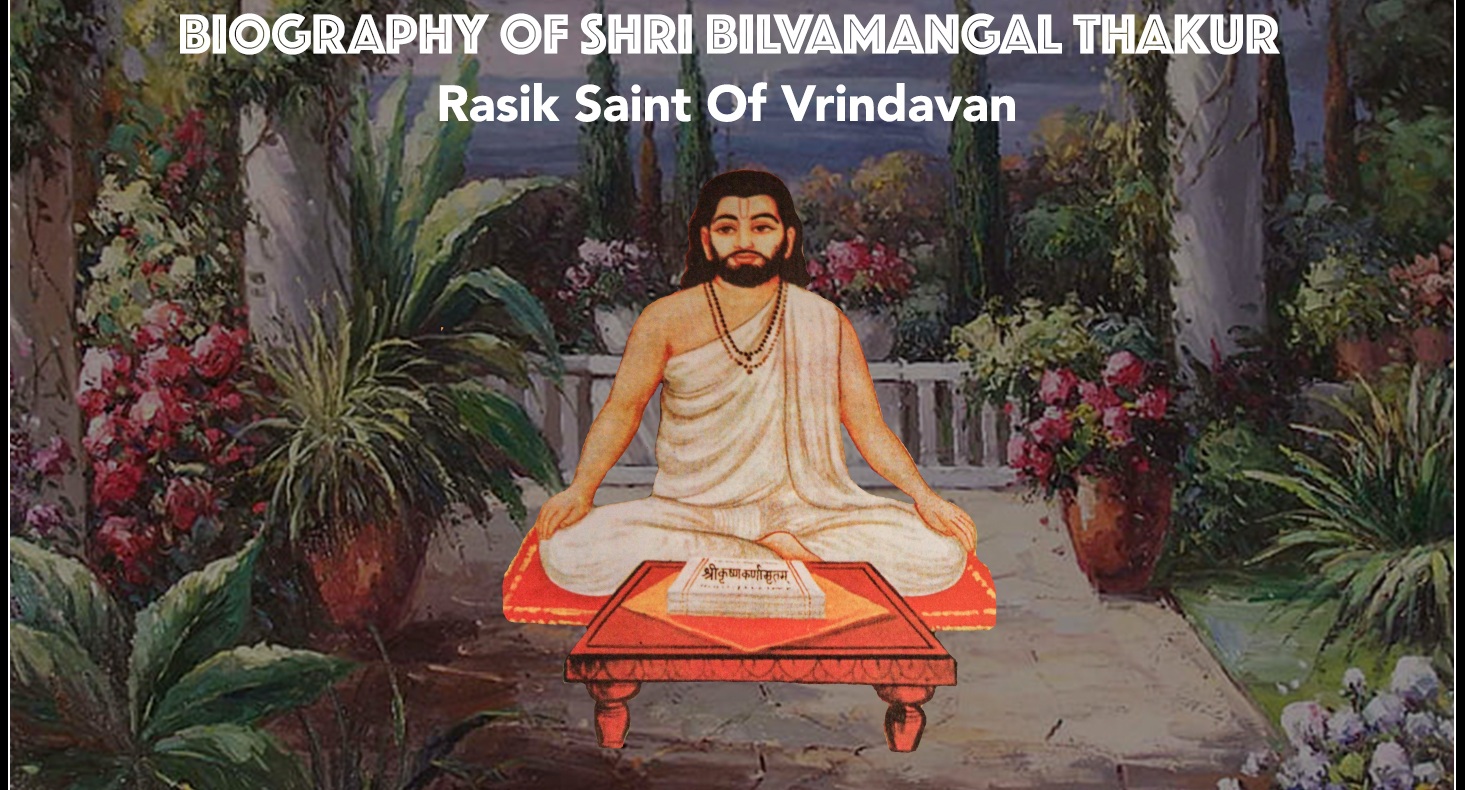
The life of Bilvamangala Thakur stands as one of the most dramatic transformation stories in the history of Bhakti literature. His journey from material obsession to ecstatic devotion toward Lord Krishna continues to inspire spiritual seekers, scholars, poets, and devotees across generations.
Known for his intense emotional devotion and profound literary contributions, Bilvamangala Thakur occupies a special place in the Gaudiya Vaishnava tradition and the wider Bhakti movement of India. His masterpiece Krishna Karnamrita deeply influenced Sri Chaitanya Mahaprabhu and later acharyas, becoming a treasured devotional text for Krishna bhaktas worldwide.
This narrative biography explores the life, spiritual awakening, literary works, miracles, teachings, disappearance, and enduring legacy of Bilvamangala Thakur.
Who Was Bilvamangala Thakur?
Bilvamangala Thakur, also known as Lila Shuka, was a great saint-poet and Krishna devotee traditionally believed to have lived between the 12th and 14th centuries in South India. Although historical details vary across traditions, most accounts agree that he was born into a learned brahmana family and possessed extraordinary intelligence from childhood.
He mastered Sanskrit scriptures, poetry, philosophy, and devotional literature at an early age. Yet despite his scholarship and favorable upbringing, Bilvamangala initially became deeply attached to sensual pleasures.
His life demonstrates a profound theological truth repeatedly emphasized in Bhakti traditions: even intense material attachment can be transformed into intense spiritual attachment when redirected toward Krishna.
Early Life and Education
Bilvamangala Thakur was born in a wealthy and cultured brahmana household. From childhood, he displayed remarkable intellectual ability and quickly became proficient in:
- Sanskrit grammar
- Vedanta philosophy
- Poetics and rhetoric
- Scriptural recitation
- Classical music and aesthetics
His parents hoped he would become a renowned scholar and spiritual leader. However, after the passing of his father, Bilvamangala gradually drifted toward worldly enjoyment. Though externally educated and refined, internally he became consumed by attachment to a famous courtesan named Chintamani. This relationship would eventually become the turning point of his entire life.
The Famous Story of Chintamani
Bilvamangala’s Dangerous Obsession
Bilvamangala became intensely infatuated with Chintamani, a highly cultured and beautiful courtesan renowned for her artistic talents. His attachment became so overpowering that it eclipsed social norms, scriptural duties, and even common sense.
One night during a violent storm, Bilvamangala became desperate to visit Chintamani. Heavy rain flooded the roads, thunder shook the sky, and crossing the river became nearly impossible. Yet his obsession drove him forward.
Traditional narrations describe astonishing incidents from that night:
- He crossed a flooded river by clinging to what he thought was a log, later discovered to be a corpse.
- He climbed into Chintamani’s residence using what he believed was a rope, only to learn it was actually a serpent.
Completely soaked and exhausted, Bilvamangala finally arrived before Chintamani.
What followed changed his destiny forever.
Chintamani’s Transformative Words
Seeing Bilvamangala’s reckless determination, Chintamani became deeply disturbed.
She reportedly told him:
“If only you had this much attachment for Krishna, your life would become perfect.”
These words pierced Bilvamangala’s heart.
In a single moment, he realized:
- the degrading nature of uncontrolled lust,
- the temporary nature of sensual pleasure,
- the immense power of concentrated attachment,
- and the possibility of redirecting that attachment toward God.
This moment became his spiritual rebirth.
Rather than condemning him, Chintamani acted as an unexpected guru, awakening divine introspection within him.
Many Bhakti teachers later cited this incident to demonstrate that Krishna can send spiritual instruction through anyone, regardless of external social status.
Renunciation and Spiritual Awakening
After this incident, Bilvamangala renounced worldly life completely.
He left behind wealth, comfort, social prestige, sensual indulgence, and material ambition.
With intense repentance and longing for spiritual realization, he began wandering as a renunciant devoted to Krishna. Unlike superficial renunciation motivated by frustration or fear, Bilvamangala’s transformation arose from genuine awakening. His material passion gradually transformed into divine longing. This conversion of kama into prema became the defining feature of his devotional life.
Meeting His Spiritual Master
According to traditional accounts, Bilvamangala later met the great saint Somagiri, who formally initiated him into Krishna bhakti.
Under spiritual guidance, Bilvamangala deepened his devotional practices:
- chanting Krishna’s holy names,
- meditation on Krishna’s form,
- scriptural study,
- devotional poetry,
- and internal remembrance of Vrindavan pastimes.
His heart became increasingly absorbed in Krishna consciousness. The emotional intensity once directed toward worldly attraction became fully spiritualized.
The Story of Self-Blinding
One of the most dramatic episodes associated with Bilvamangala Thakur involves his deliberate blinding. While traveling toward Vrindavan, Bilvamangala briefly became distracted upon seeing a beautiful woman. Recognizing that his senses still retained traces of worldly attraction, he felt intense remorse. In radical determination to avoid further distraction, he blinded himself using sharp objects.
Modern readers may find this incident extreme or symbolic. Different traditions interpret the episode differently:
- Some accept it literally.
- Others see it as symbolic of turning away from material vision.
- Some interpret it psychologically rather than historically.
Regardless of interpretation, the central teaching remains clear:
Bilvamangala desired exclusive vision of Krishna alone. His external blindness became associated with deeper spiritual sight.
Krishna Personally Guides Bilvamangala
After losing his eyesight, Bilvamangala continued his journey toward Vrindavan. Traditional narratives describe one of the most beautiful moments in Bhakti literature:
A young cowherd boy began helping the blind saint.
The boy:
- guided him along difficult roads,
- brought him food,
- protected him from danger,
- and spoke affectionately with him.
Bilvamangala became deeply attached to the mysterious child. Eventually he realized:
The cowherd boy was none other than Lord Krishna Himself.
When Krishna attempted to disappear, Bilvamangala famously cried out:
“You may escape from my physical grasp, but You can never leave my heart!”
This incident symbolizes the culmination of his spiritual journey:
The Lord personally reveals Himself to one whose devotion becomes pure and exclusive.
Arrival in Vrindavan
Bilvamangala eventually reached Vrindavan, the sacred land of Krishna’s eternal pastimes.
There he spent the remainder of his life immersed in:
- meditation,
- ecstatic devotion,
- remembrance of Krishna,
- and devotional poetry.
Vrindavan became not merely a geographical place for Bilvamangala, but a fully realized spiritual reality.
His writings vividly describe:
- Krishna’s flute,
- playful pastimes,
- divine beauty,
- affectionate exchanges with devotees,
- and the sweetness of Vraja bhakti.
Unlike dry philosophical speculation, Bilvamangala’s spirituality overflowed with emotion, intimacy, and aesthetic ecstasy.
Krishna Karnamrita: Bilvamangala’s Masterpiece
Meaning of Krishna Karnamrita
Bilvamangala Thakur’s most celebrated literary work is Krishna Karnamrita.
The title means:
- Krishna = Lord Krishna
- Karna = ear
- Amrita = nectar
“The Nectar of Krishna for the Ears.”
Themes of Krishna Karnamrita
This devotional Sanskrit text is filled with ecstatic expressions of divine love.
1. The Beauty of Krishna
Bilvamangala repeatedly glorifies Krishna’s smile, flute, eyes, gait, voice, and enchanting personality.
2. Madhurya Bhava
The text emphasizes intimate sweetness rather than majestic reverence.
Krishna appears as the playful cowherd boy, beloved of the gopis, friend of devotees, and supreme object of love.
3. Intense Longing
A recurring mood throughout the work is viraha — ecstatic separation from Krishna.
Bilvamangala expresses:
- yearning,
- helplessness,
- emotional absorption,
- and overwhelming devotion.
4. Direct Personal Experience
The poetry often reads not as abstract theology but as living encounter. Krishna appears immediate, personal, and emotionally present.
Influence on Sri Chaitanya Mahaprabhu
Bilvamangala Thakur’s writings became especially prominent through Sri Chaitanya Mahaprabhu. During His South India tour, Chaitanya Mahaprabhu discovered Krishna Karnamrita and was deeply moved by its devotional intensity. He brought copies of the text back and shared it among His followers. Gaudiya Vaishnava acharyas later honored Krishna Karnamrita as one of the most elevated devotional works expressing spontaneous love for Krishna.
Its influence can be seen in:
- Gaudiya theology,
- devotional poetry,
- kirtan traditions,
- and meditations on Krishna’s sweetness.
Literary Style of Bilvamangala Thakur
Bilvamangala’s writing style combines:
- poetic elegance,
- theological depth,
- emotional intensity,
- aesthetic sophistication
- and devotional absorption.
His Sanskrit verses are admired for their:
- musicality,
- vivid imagery,
- emotional realism,
- and lyrical beauty.
Unlike purely intellectual philosophical works, Bilvamangala’s compositions aim to awaken devotion directly within the reader’s heart. Many devotees describe reading Krishna Karnamrita as a meditative experience rather than merely literary study.
Philosophical Significance
Bilvamangala Thakur’s life carries profound philosophical implications within Bhakti traditions.
Transformation Rather Than Suppression
His story illustrates that spiritual advancement does not necessarily require destroying emotion.
Rather:
- material attachment becomes spiritual attachment,
- selfish desire becomes divine longing,
- and worldly obsession becomes transcendental love.
The Power of Concentrated Consciousness
Bilvamangala’s life demonstrates that intense focus itself is spiritually powerful when redirected toward Krishna.
Bhakti Above Scholarship
Though highly learned, Bilvamangala ultimately discovered fulfillment not through intellectual achievement alone, but through loving devotion.
Divine Grace
His transformation repeatedly highlights Krishna’s mercy operating through unexpected circumstances.
Popular Stories and Miracles
Many devotional traditions preserve miraculous stories connected to Bilvamangala Thakur.
Krishna Stealing Butter for Him
Some narrations describe Krishna personally bringing food to Bilvamangala in the form of a cowherd boy.
Mystical Visions
Bilvamangala frequently experienced vivid internal visions of Krishna’s pastimes.
Ecstatic Absorption
He would sometimes become so absorbed in devotional ecstasy that he lost awareness of the external world.
These stories emphasize the Bhakti principle that Krishna reciprocates personally with sincere devotion.
Bilvamangala Thakur and Gaudiya Vaishnavism
Although Bilvamangala lived before Sri Chaitanya Mahaprabhu, his writings deeply harmonize with later Gaudiya Vaishnava theology.
Key shared themes include:
- spontaneous devotion (raga bhakti),
- Vrindavan-centered worship,
- the sweetness of Krishna,
- emotional absorption in divine love,
- and intimate devotional moods.
Because of this alignment, Gaudiya Vaishnavas regard Bilvamangala Thakur with great reverence.
His works are often studied alongside:
- Srimad Bhagavatam,
- Govinda Lilamrita,
- Vilapa Kusumanjali,
- and writings of the Goswamis.
Disappearance of Bilvamangala Thakur
Details regarding Bilvamangala Thakur’s final years and disappearance vary across traditions. Most accounts state that he spent his concluding years in Vrindavan absorbed in uninterrupted remembrance of Krishna. His disappearance is described not as ordinary death, but as entry into Krishna’s eternal pastimes.
Important Teachings from Bilvamangala Thakur
1. Intensity Matters
Spiritual life deepens when devotion becomes wholehearted rather than superficial.
2. Attachment Can Be Redirected
The same emotional energy causing bondage can become the force leading to liberation.
3. Krishna Responds Personally
Bhakti is relational. Krishna reciprocates with sincere devotion.
4. Divine Love Surpasses Material Pleasure
Temporary sensual enjoyment ultimately leaves the heart unsatisfied compared to spiritual bliss.
5. Spiritual Vision Is Greater Than Physical Sight
True perception arises through purified consciousness.
Bilvamangala Thakur in Modern Spiritual Discussions
Modern readers often find his story relevant because it addresses:
- addiction,
- obsession,
- emotional transformation,
- repentance
- and spiritual awakening.
His journey resonates strongly in contemporary discussions about redirecting human desire toward higher purpose.
Frequently Asked Questions About Bilvamangala Thakur
Who was Bilvamangala Thakur?
Bilvamangala Thakur was a saint-poet and Krishna devotee famous for transforming from worldly obsession to intense divine love.
What is Bilvamangala Thakur famous for?
He is best known for:
- his dramatic spiritual transformation,
- his devotion to Krishna,
- and his literary masterpiece Krishna Karnamrita.
Who was Chintamani?
Chintamani was the courtesan whose powerful words inspired Bilvamangala’s spiritual awakening.
What is Krishna Karnamrita?
Krishna Karnamrita is a devotional Sanskrit text celebrating the beauty and sweetness of Lord Krishna.
Did Sri Chaitanya Mahaprabhu appreciate Krishna Karnamrita?
Yes. Sri Chaitanya Mahaprabhu greatly cherished the work and helped popularize it among His followers.
Conclusion
The life of Bilvamangala Thakur is one of the most compelling narratives in devotional spirituality.
His story moves from:
- obsession to transcendence,
- lust to divine love,
- blindness to spiritual vision,
- and material attachment to ecstatic devotion.
More than a historical figure, Bilvamangala remains a timeless example of the transformative power of Bhakti. His writings continue to awaken devotion, inspire contemplation, and draw readers toward the sweetness of Krishna consciousness. For spiritual seekers across traditions, Bilvamangala Thakur stands as living proof that even the most turbulent human emotions can ultimately become pathways to divine realization.