The Nine Days of Intense Heat — A Vedic Perspective for Modern Life
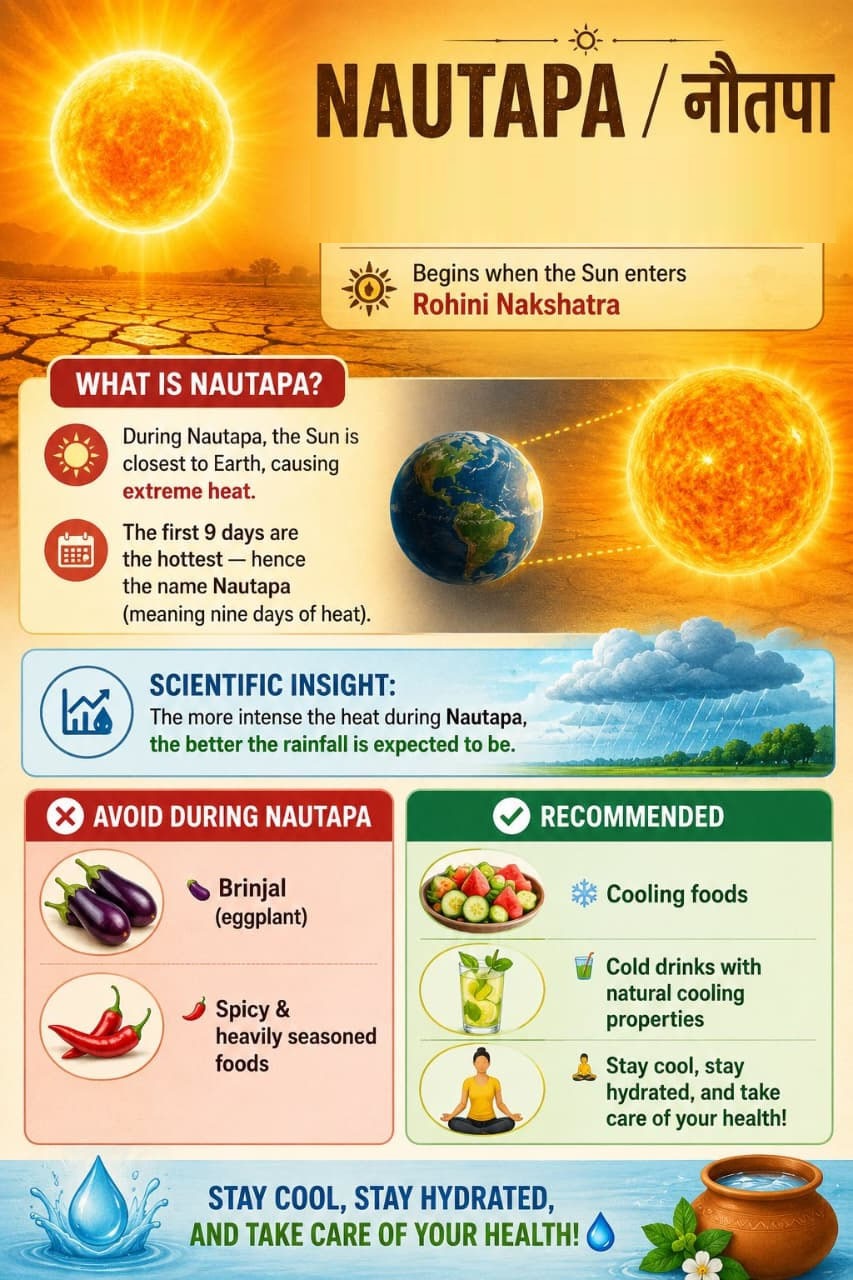
Every year, during the peak of Indian summer, a unique period called Nautapa arrives. The word comes from two Sanskrit-derived terms — “Nau” (nine) and “Tapa” (heat, austerity, or penance). Traditionally, Nautapa refers to the nine hottest days of the year when the Sun enters Rohini Nakshatra according to Vedic astronomy and Jyotisha.
For many people today, Nautapa is simply a weather phenomenon. But in Vedic culture, it carries deeper meanings connected to nature, discipline, agriculture, purification, and spiritual reflection.
What Happens During Nautapa?
According to traditional Hindu calendrical understanding, Nautapa begins when Surya (the Sun-god) enters Rohini Nakshatra. During this phase, temperatures rise sharply across many regions of India, often accompanied by dry winds and severe heatwaves.
Ancient Indian traditions observed that these days often prepare the atmosphere for the coming monsoon cycle. Farmers, astrologers, and village communities historically monitored Nautapa carefully because it was linked to rainfall predictions and agricultural planning.
The Spiritual Meaning of “Tapa”
The Sanskrit word tapa does not merely mean physical heat. It also means austerity, purification, discipline, and inner refinement.
In Vedic thought, heat transforms:
- Gold becomes purified through fire.
- Clay becomes strong through baking.
- Seeds sprout after enduring intense seasonal cycles.
- Human character matures through discipline.
This symbolism is deeply relevant spiritually.
From a bhakti perspective, external summer heat can remind us of the internal “heat” created by material desires, anger, greed, envy, and restlessness. Real spiritual life begins when consciousness is purified through remembrance of Krishna, regulated habits, humility, and devotional service.
What Can Devotees Learn from Nautapa?
The essence of Vedic culture is not superstition but seeing nature in relation to Bhagavan.
In the Bhagavad-gita, Bhagavad-gita Krishna explains that material nature works under His supervision. The changing seasons, heat, rain, and cycles of time remind us that the material world is temporary and constantly shifting.
Nautapa can therefore become an opportunity for devotees to cultivate:
1. Simplicity
Summer naturally reduces unnecessary indulgence. Light food, simpler living, and reduced bodily demands help calm the mind.
2. Compassion
Traditionally, people distribute water, buttermilk, fruits, and cooling drinks during this period. Caring for cows, birds, animals, and travelers is highly emphasized.
For Vaishnavas, this mood of seva reflects Krishna consciousness in action.
3. Increased Sadhana
Just as external heat purifies the atmosphere, sincere chanting purifies the heart.
Many devotees use challenging seasons to deepen:
- Japa meditation
- Hearing hari-katha
- Reading scriptures
- Kirtan
- Regulated lifestyle
Nautapa and Vedic Cosmology
Traditional Jyotisha literature associates Nautapa with the Sun’s transit through Rohini Nakshatra. Rohini is connected with nourishment, fertility, and growth. Ancient thinkers saw the intense solar influence during this period as part of nature’s preparation for future abundance and rainfall.
Whether one accepts every astrological interpretation literally or symbolically, Vedic civilization consistently emphasized one principle:
Human beings should live in harmony with cosmic order, not in defiance of it.
ISKCON Perspective: Beyond Fear and Superstition
In devotional life, the goal is not to become obsessed with astrological fear or material predictions. A. C. Bhaktivedanta Swami Prabhupada repeatedly emphasized that devotees should place ultimate faith in Krishna rather than become overly anxious about planetary arrangements.
However, Vedic culture also teaches respect for natural rhythms and gratitude toward the Lord’s creation.
Therefore, devotees may:
- Respect seasonal disciplines
- Care for health responsibly
- Increase remembrance of Krishna
- Serve others compassionately
But they should avoid panic, fatalism, or superstition.
Practical Health Wisdom During Nautapa
Extreme heat can genuinely affect health. Modern science also recognizes the dangers of dehydration, heatstroke, and heat exhaustion during intense summer conditions.
Helpful practices include:
- Staying hydrated
- Avoiding excessive sun exposure
- Eating lighter sattvic foods
- Taking fruits and natural cooling drinks
- Protecting cows and animals from heat
- Avoiding unnecessary travel during peak afternoon heat
The Deeper Lesson
Nautapa teaches a timeless spiritual truth:
Just as the Earth undergoes intense heat before renewal, the conditioned soul also undergoes purification before awakening deeper devotion.
External heat eventually passes.
But the cooling shelter of Krishna consciousness gives lasting relief to the heart.
As devotees chant the holy names of Krishna amidst changing seasons and temporary discomforts, they remember that real peace comes not from controlling nature, but from reconnecting with the Supreme Lord through bhakti.